Best Treadmill for Home Use: Which Type Should You Choose?
September 16, 2026
The best treadmill for home use is not necessarily the fastest, largest, most powerful, or most expensive machine you can fit through the door. A treadmill that works beautifully for daily running may be unnecessarily large for someone who mainly walks. A compact folding model may be ideal for an apartment but frustrating for a taller runner who wants more belt space.
That is why choosing a home treadmill is better approached as a comparison of needs rather than a search for one universal winner.
For most buyers, the decision comes down to several broad categories: a full-size treadmill designed for walking and running, a compact or folding treadmill, a walking-focused treadmill or walking pad, and, in some cases, a manual treadmill. Each makes different compromises in space, performance, storage, controls, and convenience.
This guide compares those options and explains which type is likely to make the most sense for different homes and exercise routines.
Overview: What Makes a Treadmill Good for Home Use?
A commercial gym can dedicate a large amount of floor space to cardio equipment. Your home probably cannot. That changes the buying criteria.
A good home treadmill needs to fit both your exercise needs and your living space. Before comparing features, determine how you expect to use the machine.
Will you primarily walk, jog, or run?
How frequently do you expect to use it?
Will multiple household members use it?
Can the treadmill remain permanently set up?
Does it need to fold or move after every workout?
How much floor space and ceiling clearance are available?
Could operating noise disturb other people?
What user weight capacity do you require?
Do you want incline training?
How much maintenance are you prepared to perform?
Answering these questions first helps prevent a common treadmill-buying mistake: paying for features that look impressive on a specification sheet but do little for your actual routine.
Option A: Full-Size Motorized Treadmill
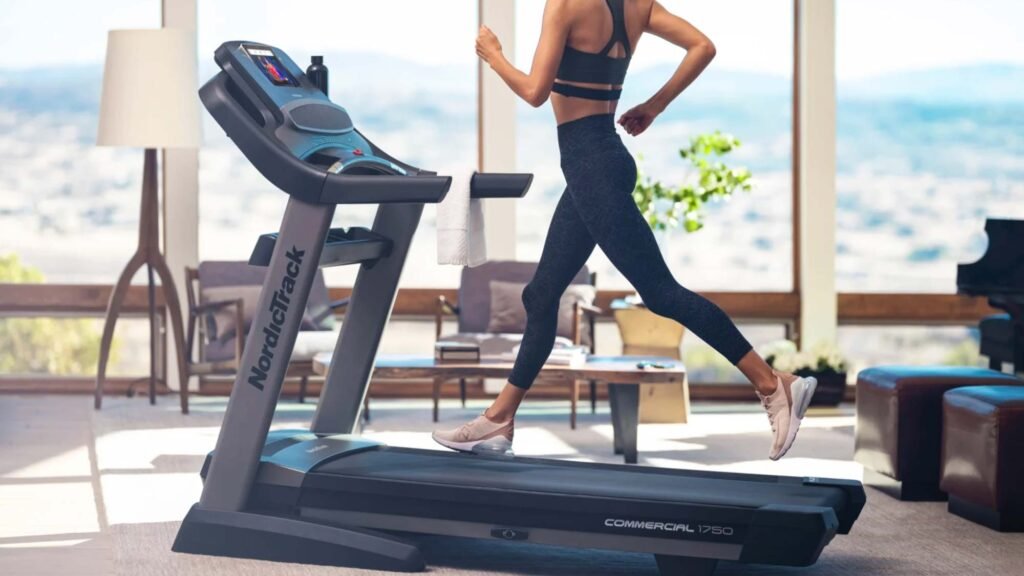
A traditional motorized treadmill is the closest home equivalent to the machines most people recognize from gyms. The belt is powered by a motor, and the user selects a speed through the treadmill’s controls. Depending on the model, additional features may include adjustable incline, workout programs, performance displays, connectivity, and various cushioning systems.
The major advantage is versatility. A properly selected full-size treadmill can accommodate walking, jogging, and running, making this category particularly attractive to households where different people have different training preferences.
The tradeoff is space. Larger treadmills can occupy a substantial permanent footprint, and the dimensions listed for the machine itself do not represent all the space you may need. You should also follow the manufacturer’s recommendations for clearance around the treadmill.
Pros:
Suitable models are available for walking, jogging, and running.
Typically offers broader speed capabilities than walking-focused machines.
Many models offer incline adjustment.
Larger models may provide more generous walking or running surfaces.
Often provides more workout and control options.
Can be practical for households with several users.
Cons:
Requires considerable floor space.
Can be heavy and difficult to relocate.
May produce noticeable operational and footfall noise.
Usually requires a larger budget than very basic walking equipment.
May be unnecessarily complex for someone who only wants casual indoor walking.
Best For: People who want one treadmill for a broad range of walking, jogging, or running workouts and have enough dedicated space to accommodate it properly.
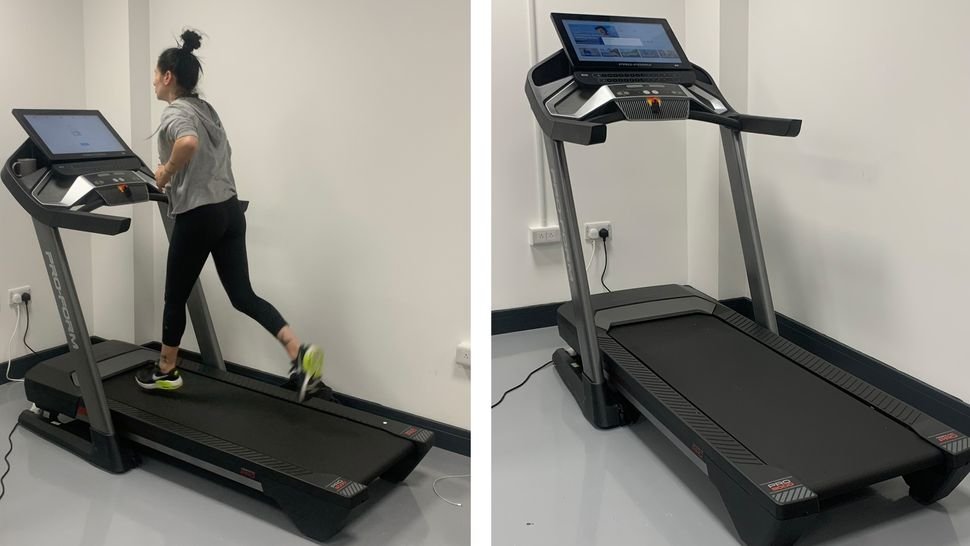
Option B: Folding Treadmill
A folding treadmill attempts to solve one of the biggest home-fitness problems: where do you put the machine when you are not exercising?
On these treadmills, part of the deck can be raised into a storage position according to the manufacturer’s design. This can reduce the amount of floor area occupied while the treadmill is not being used.
However, “folding” does not necessarily mean “small.”
A substantial treadmill may still be large when folded, and it may be too heavy to move casually between rooms. Always compare both the operating dimensions and folded dimensions of a specific model.
Pros:
Can reduce the treadmill’s storage footprint.
Provides more flexibility in multipurpose rooms.
Available in configurations intended for different exercise levels.
Can offer many of the functions found on non-folding treadmills.
Cons:
Folding does not guarantee compact storage.
The treadmill may still be heavy.
You need enough room to operate the folding mechanism safely.
Repeated folding may become inconvenient if you exercise frequently.
Design and stability vary significantly between models.
Best For: Home users who want the capabilities of a conventional treadmill but need to reclaim some floor space between workouts.
Option C: Walking Treadmill or Walking Pad
If your primary goal is indoor walking, a walking-focused treadmill deserves serious consideration.
These machines generally emphasize a smaller footprint and simpler operation. Some are designed for use in compact living spaces, while certain models are intended to fit beneath suitable standing desks.
The key limitation is equally important: a walking-focused machine should not automatically be treated as a running treadmill.
Always check the manufacturer’s specified speed range and intended use. A compact appearance does not tell you whether a machine is designed to tolerate your preferred workout.
Pros:
Often more compact than traditional treadmills.
Can be practical for walking-focused routines.
Some designs are relatively easy to store.
Certain models can integrate with an appropriate standing-desk setup.
Usually has simpler controls than feature-heavy running treadmills.
Cons:
Some models are intended only for walking.
Walking surfaces may be more compact.
Incline may be limited or unavailable.
Handrails and consoles may be minimal or absent depending on the design.
Compact construction can involve compromises in features or user experience.
Best For: People whose main objective is convenient indoor walking and who prioritize compact dimensions over extensive running features.
Option D: Manual Treadmill
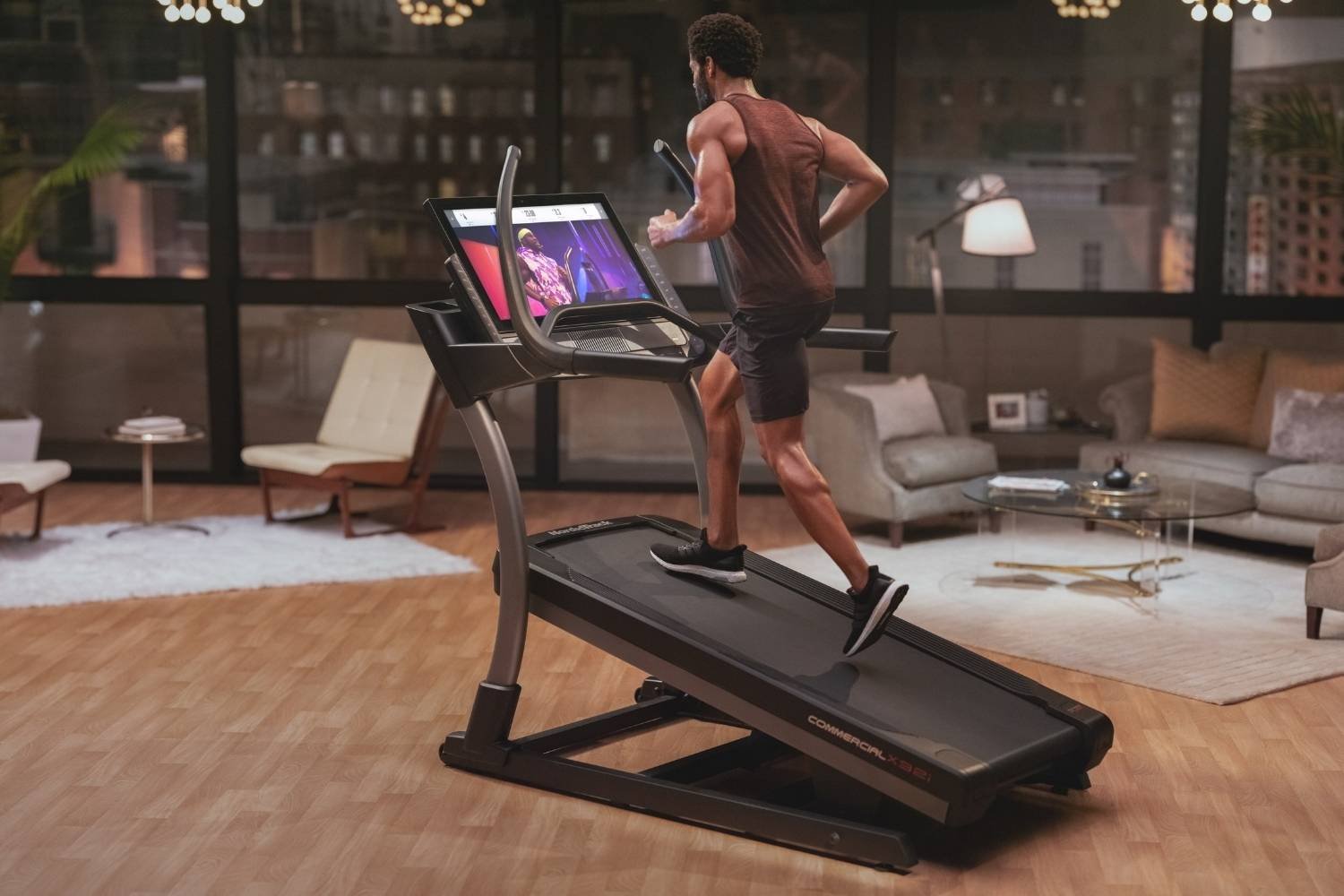
A manual treadmill takes a fundamentally different approach. Instead of an electric motor driving the belt, the user’s movement contributes to belt motion. Designs vary considerably, including basic flat or inclined machines and specialized curved treadmills.
The absence of a drive motor changes both the feel and the buying decision.
A manual treadmill may appeal to someone who prefers a mechanically simpler machine or does not want to depend on electrical power for belt movement. However, manual operation should not automatically be interpreted as easier, quieter, cheaper, or better. The experience depends heavily on the particular design.
Pros:
No drive motor is required to move the belt.
Some designs can be mechanically simpler.
Does not require electrical power for motorized belt movement.
May appeal to users specifically seeking self-powered treadmill exercise.
Cons:
Movement can feel very different from a motorized treadmill.
Not every design is suitable for every type of workout.
Basic manual models and specialized curved treadmills should not be treated as equivalent.
Some users may prefer the predictable speed control of a motorized belt.
Best For: Buyers who specifically want a self-powered treadmill and understand how the chosen design differs from a conventional motorized machine.
Side-by-Side Comparison: Which Type Fits Your Home?
Feature
Full-Size Motorized
Folding Treadmill
Walking Treadmill / Pad
Manual Treadmill
Walking
Excellent for suitable models
Excellent for suitable models
Primary strength
Depends on design
Running
Suitable models available
Suitable models available
Often limited; verify intended use
Highly design-dependent
Space requirement
Usually higher
Moderate to high during use
Generally lower
Varies
Storage convenience
Usually limited
Better than equivalent non-folding designs
Often a major advantage
Varies
Motorized speed control
Yes
Yes on motorized models
Usually, depending on model
No drive motor
Incline availability
Common on many models
Available on many models
Often more limited
Design-dependent
Best overall use case
Versatile home training
Versatility with storage needs
Compact indoor walking
Self-powered exercise
This comparison highlights why asking for the single “best” treadmill can be misleading. A walking pad can outperform a full-size treadmill in storage convenience while being the wrong choice for a serious running routine. A large running treadmill may offer exactly the opposite combination.
Running vs. Walking: The Most Important Decision
If you remember only one thing before shopping, make it this: decide whether you actually intend to run.
Running generally places different demands on treadmill dimensions, speed capability, stability, and construction than casual walking. For that reason, someone buying for regular running should evaluate the machine specifically for running rather than assuming any motorized treadmill will work.
Walking-focused buyers have more flexibility. If you have no interest in running, you may not need to dedicate space and money to capabilities you will never use.
Buying Criterion
Primarily Walking
Regular Running
Belt dimensions
Comfortable walking space is the priority
More room may be desirable for a running stride
Speed capability
Walking range may be sufficient
Must accommodate intended running pace
Stability
Important
Especially important as pace and impact increase
Cushioning
Comfort preference matters
Often a significant comparison point
Machine size
Compact designs may work well
Larger designs may be appropriate depending on the user and model
Storage
Walking pads can offer useful options
Running-capable folding machines may require more room
Winner for Dedicated Walking: A walking treadmill or walking pad may offer the best balance when compactness and straightforward walking are the priorities.
Winner for Regular Running: A treadmill specifically designed by its manufacturer for the user’s intended running demands is generally the more appropriate category.
Folding vs. Non-Folding: Which Is Better?
Folding sounds automatically better for home use, but the answer depends on your room.
If you have a dedicated gym where the treadmill will remain permanently open, a folding mechanism may provide little practical value. You could instead prioritize belt dimensions, controls, construction, and other features.
If the treadmill will live in a bedroom, office, or multipurpose room, folding can be much more valuable.
Folding is best when:
you regularly need the floor space for other activities;
the folded dimensions genuinely fit your storage plan;
you can operate the folding system comfortably;
the model still meets your exercise requirements.
Non-folding is best when:
you have dedicated treadmill space;
storage is irrelevant;
you do not want to raise and lower the deck repeatedly;
you prefer to prioritize other characteristics over foldability.
Winner: Neither universally. Folding wins for multipurpose rooms; non-folding can make perfect sense for dedicated exercise spaces.
How Much Belt Space Do You Need?
Belt dimensions are among the most useful specifications to compare, particularly if you intend to run.
Do not rely on terms such as “large,” “wide,” or “spacious” without checking actual manufacturer dimensions. Your height, stride, walking or running style, and comfort preferences influence how much usable space feels appropriate.
When comparing treadmills:
check both belt width and length;
consider your intended walking or running use;
remember that compact dimensions usually involve some compromise;
consider all household members who will use the machine;
do not assume the treadmill’s total dimensions equal its usable belt dimensions.
If possible, trying a treadmill before purchase can provide information that specifications alone cannot: whether the deck feels appropriately spacious for your natural movement.
Motor Specifications: Bigger Numbers Need Context
Motor specifications frequently dominate treadmill marketing, but they should not be evaluated in isolation.
Rather than assuming the largest advertised number identifies the best treadmill, determine whether the manufacturer recommends the machine for your intended use. Walking, frequent running, user load, workout duration, and product design all influence the demands placed on a treadmill.
Also be careful when comparing motor terminology between products. Manufacturers may present specifications differently, so apparently similar numbers are not always enough for a meaningful comparison.
A more practical buying process is to evaluate the entire system:
intended walking or running use;
speed range;
belt dimensions;
manufacturer-specified user weight capacity;
incline capability;
warranty terms;
service availability;
maintenance requirements.
Incline vs. No Incline
Incline provides another way to vary treadmill sessions without relying only on speed. But it is not essential for every buyer.
A treadmill with adjustable incline may make sense if incline walking or running is something you genuinely plan to include in your workouts. If your objective is simply to accumulate convenient indoor walking, paying for an elaborate incline system may offer limited value.
Best For Incline: Users who deliberately want elevation changes as part of their training.
Best Without Incline: Users who prioritize simple walking, compactness, or straightforward controls.
Noise: The Specification Buyers Often Overlook
Home treadmill noise is more complicated than asking whether the motor is “quiet.”
You may hear the motor, belt, rollers, cooling components, and your own footfalls. The floor and building construction can also influence how vibration is transmitted to adjacent rooms or apartments.
This makes noise especially important for:
apartment residents;
early-morning or late-night users;
home offices;
rooms above occupied living spaces;
households with sleeping children or other noise-sensitive occupants.
Do not assume that a treadmill advertised as quiet will be effectively silent in your home. Look for credible noise information, user experiences relevant to your type of flooring, and manufacturer guidance about placement.
Weight Capacity Is a Safety Specification, Not a Target
Always check the manufacturer’s stated user weight capacity for the exact treadmill you are considering.
Never infer capacity from the physical appearance of a machine. Two similarly sized treadmills can have different manufacturer limits.
If several people will use the treadmill, evaluate it for every intended user rather than only the person purchasing it.
⚠ Safety Note: Do not exceed the manufacturer’s stated user limits. Also follow installation, electrical, clearance, and maintenance requirements for the specific treadmill.
Best Treadmill Type by Situation
Your Situation
Strong Starting Option
Why
Daily indoor walking
Walking treadmill or walking pad
Focuses on the activity you actually plan to perform
Walking plus jogging
Motorized treadmill
Broader speed capabilities on appropriate models
Regular home running
Running-capable full-size treadmill
Allows you to prioritize running space, stability, and suitable performance
Small apartment
Compact walking or folding treadmill
Storage and footprint become major priorities
Multipurpose room
Folding treadmill
Can reclaim some floor area between sessions
Dedicated home gym
Full-size treadmill
Permanent placement reduces the importance of compact storage
Several household users
Versatile motorized treadmill
Can accommodate broader workout requirements when appropriately specified
Walking while working
Compatible walking pad
Some designs are specifically suited to suitable desk setups
No powered belt desired
Manual treadmill
User-driven belt movement
What Should You Measure Before Buying?
A treadmill can be excellent equipment and still be a terrible purchase if it does not fit your room.
Before ordering, measure the intended location and compare those measurements with the manufacturer’s requirements.
Operating footprint: How much space does the treadmill occupy when ready to use?
Required clearance: What surrounding safety clearance does the manufacturer specify?
Folded dimensions: If applicable, where will the machine fit when folded?
Ceiling clearance: Remember that the treadmill deck raises your standing position above the floor, and incline can change your elevation further.
Doorways and access: Can the packaged or assembled machine reach its intended room?
Electrical access: For powered treadmills, follow the manufacturer’s electrical requirements.
Also consider the practical path into the room. A treadmill that technically fits its final location may still be extremely difficult to move through stairs, hallways, or doorways.
Features Worth Paying For vs. Features You May Not Need
The best treadmill purchase often comes from separating functional requirements from attractive extras.
Feature
Potentially Important When…
Potentially Optional When…
Folding deck
Space must be reclaimed after exercise
Treadmill has permanent gym space
Incline
You plan to use incline training
You only want straightforward level walking
Large display
On-machine information is important to you
You prefer simple controls
Connected workouts
You value guided digital training
You already follow another training plan
Transport wheels
You expect to reposition the machine
It will remain permanently installed
Higher speed capability
Your training actually requires it
You intend to walk only
A feature has value when it solves a problem or supports an activity you genuinely intend to perform. Otherwise, it is simply another specification.
Recommendation: Choose for the Workout You Will Actually Do
There is no single best treadmill for home use because “home use” can mean a 30-minute daily walk in a small apartment, regular running in a dedicated gym, or occasional exercise shared among several family members.
For walking-focused users with limited space, start by comparing walking treadmills and walking pads. Prioritize dimensions, stability, intended speed range, storage, controls, and manufacturer-specified user capacity.
For walkers and joggers who want greater versatility, a conventional motorized treadmill offers a broader range of possibilities. A folding version may be preferable when the room has other uses.
For regular runners, prioritize a treadmill explicitly intended for your level of running. Pay particular attention to usable belt dimensions, stability, speed capability, cushioning, manufacturer limits, warranty, and service support rather than choosing primarily by compactness.
For a dedicated home gym, a full-size non-folding or folding treadmill can make sense because storage is less important. This gives you more freedom to prioritize the actual exercise experience.
For buyers interested in self-powered exercise, manual treadmills deserve separate consideration—but compare their design and intended use carefully because manual treadmills can differ dramatically from one another.
Before making the final decision, use this checklist:
✓ Decide whether you will walk, jog, run, or combine them.
✓ Measure your available floor and ceiling space.
✓ Check the actual belt dimensions.
✓ Verify the manufacturer’s intended use and speed range.
✓ Check the stated user weight capacity.
✓ Decide whether folding genuinely improves your storage situation.
✓ Consider noise and vibration in your particular home.
✓ Review incline options only if you expect to use them.
✓ Understand maintenance requirements.
✓ Compare warranty and service information.
✓ Confirm that the treadmill can physically reach its intended room.
The strongest choice is ultimately the treadmill that fits your body, room, workout style, and routine without making exercise unnecessarily inconvenient. Instead of searching for the machine with the longest feature list, choose the one whose features match how you will actually use it.
Safety Note: Read the treadmill manufacturer’s setup and operating instructions before use. Use the safety features provided with the machine, keep the surrounding area appropriately clear, wear suitable footwear, and begin gradually. Stop exercising if you experience unusual pain, dizziness, or other concerning symptoms. If you have a medical condition, injury, or significant physical limitation that may affect exercise, seek appropriate professional guidance.Title: Best Treadmill for Home Use: Which Type Should You Choose?