Treadmills: How to Choose the Right One for Home Workouts
October 21, 2026
Thinking about adding a treadmill to your home? You’re not alone. Whether you want to walk more often, keep running when the weather turns bad, or make exercise easier to fit into your schedule, a treadmill can be a practical addition to your routine.
But here’s the question: what kind of treadmill do you actually need?
Some models are built for regular running, while others focus on walking, compact storage, or simple controls. The differences matter because a treadmill that works perfectly for one person may be inconvenient for someone else.
In this guide, we’ll look at the main treadmill types, the features worth comparing, and the everyday details that can make home workouts easier.
Why Choose a Treadmill for Home Workouts?
One of the biggest advantages of a treadmill is convenience. You don’t need to plan your workout around rain, cold weather, or daylight. You can exercise indoors whenever it fits your schedule.
A treadmill also gives you control over your pace. Instead of adjusting to hills, traffic, or uneven sidewalks, you can choose a speed that matches your intended workout.
For many people, that makes walking or running easier to organize.
Here are a few reasons a home treadmill might be useful:
Flexible scheduling: Walk or run without traveling to a gym.
Adjustable pace: Choose a speed appropriate for your ability.
Workout variety: Some models offer incline settings and built-in programs.
Indoor convenience: Exercise without depending on outdoor conditions.
Routine consistency: Keep equipment available in your own home.
Of course, owning a treadmill doesn’t automatically create an exercise habit. The machine still needs to fit your lifestyle, available space, and preferred activities.
What Types of Treadmills Are Available?
Not every treadmill is designed for the same purpose. Understanding the main categories can make shopping much easier.
Traditional Motorized Treadmills
These are the machines most people picture when they hear the word “treadmill.” An electric motor moves the belt, and you adjust the speed through a control panel.
Depending on the model, a motorized treadmill may support walking, jogging, running, and incline workouts. Larger models often provide more room for movement, although actual belt dimensions vary.
Best for: People who want flexibility between walking and running and have enough room for the equipment.
Folding Treadmills
Need your exercise space to double as a bedroom or office? A folding treadmill may be worth considering.
These machines allow part of the deck to fold into a storage position. However, folding doesn’t always mean lightweight or easy to move. Some models remain substantial even when folded.
Best for: Homes where floor space needs to serve multiple purposes.
Walking Pads and Compact Treadmills
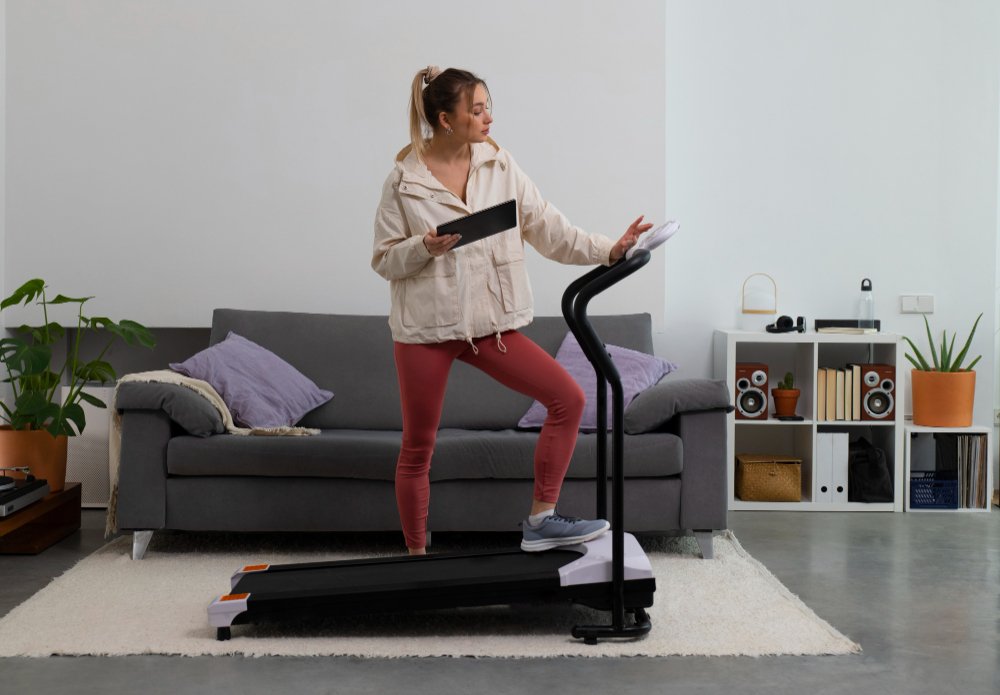
Walking pads typically prioritize smaller dimensions and straightforward walking. Certain models are designed for use with compatible standing desks, while others are intended for general indoor walking.
They can be convenient when you don’t need running speeds or a large console. Just remember that not every walking pad is designed for jogging or running.
Best for: Walking-focused users, smaller living spaces, and people who prioritize compact storage.
Manual Treadmills
Manual treadmills use your movement to drive the belt rather than relying on a powered belt motor. They range from basic designs to specialized curved machines.
The experience can feel quite different from a motorized treadmill, so it’s worth understanding the specific design before buying.
Best for: People who specifically prefer self-powered treadmill exercise.
Which Treadmill Features Really Matter?
It’s easy to get distracted by screens, workout programs, and long feature lists. But the most useful specifications are often the simplest ones.
Start with the features that affect how the treadmill actually feels and functions.
Belt size: Make sure the walking or running surface provides enough room for your natural stride.
Speed range: Check that the treadmill supports your intended walking, jogging, or running pace.
Incline: Adjustable incline can add variety if you plan to use it.
Weight capacity: Verify the manufacturer’s stated user limit.
Cushioning: Compare deck comfort and construction, especially if you plan to run regularly.
Controls: Look for settings that are easy to understand and adjust.
Safety features: Check for an appropriate emergency-stop system and follow its operating instructions.
Maintenance: Understand the manufacturer’s cleaning, belt adjustment, and lubrication requirements.
What about motor power? It’s relevant, particularly for running-oriented machines, but an advertised motor number alone doesn’t tell you everything about durability or suitability.
Consider the complete machine and its intended use rather than choosing based on one specification.
“The best treadmill isn’t the one with the most features. It’s the one that makes your preferred workout easier to repeat.”
How Much Space Do You Need for a Treadmill?
Before ordering a treadmill, measure your room. And don’t stop at measuring the machine’s advertised length and width.
You’ll also need to consider safe clearance around the equipment, ceiling height, access to electrical power for motorized models, and enough room to get on and off comfortably.
If you’re considering a folding treadmill, check its dimensions in both operating and storage positions.
For an apartment, think about noise and vibration as well. A treadmill can produce sound from the motor, moving belt, and footfalls. The floor beneath it can influence how much noise reaches other rooms.
Quick Tip: Mark the treadmill’s proposed footprint on the floor using removable tape. Then check the manufacturer’s required safety clearances. This simple test can help you visualize whether the equipment will fit comfortably before you buy it.
Walking or Running: How Should You Choose?
Here’s an important question: are you buying a treadmill for the workouts you already enjoy, or for workouts you imagine doing someday?
If your main goal is walking, you may not need a large running treadmill. A compact walking-focused model might offer the convenience you want without occupying unnecessary space.
On the other hand, if you plan to run regularly, it’s worth prioritizing a machine specifically designed for running. Belt dimensions, speed capability, stability, and construction become especially important.
A simple way to think about it:
Mostly walking: Prioritize comfort, easy controls, stability, and storage.
Walking and jogging: Look for a versatile motorized model with a suitable speed range.
Regular running: Focus on a running-capable treadmill with adequate belt space and appropriate specifications.
Limited space: Compare folding models and compact treadmills without sacrificing essential safety or exercise requirements.
If several people in your household will use the machine, compare their needs too. The treadmill should accommodate every intended user within the manufacturer’s limits.
How Do You Start Using a Treadmill at Home?
Once your treadmill is set up correctly, there’s no need to begin with a demanding workout. Start by getting comfortable with the controls and the movement of the belt.
Before your first session, read the manufacturer’s instructions, learn how the emergency-stop system works, and check that the surrounding area is clear.
Then follow a simple progression:
Start at an easy walking pace. Choose a speed that feels controlled and comfortable.
Practice natural movement. Look ahead, maintain comfortable posture, and avoid unnecessary tension.
Learn the controls. Become familiar with changing speed and stopping safely.
Increase gradually. Add duration, speed, or incline only when appropriate for your ability and goals.
Finish at a comfortable pace. Slow down before ending the session.
You don’t need to increase every variable at once. A small, manageable change is easier to evaluate than suddenly making the workout longer, faster, and steeper.
If you’re new to exercise or returning after a long break, a gradual approach is particularly important.
What Are the Most Common Treadmill Mistakes?
Even a well-designed treadmill can become frustrating when the setup or workout approach doesn’t match your needs.
One common mistake is choosing a machine based mainly on price or appearance. A treadmill might look compact and attractive, but if the belt feels too short or the controls are awkward, it may not be comfortable to use.
Another mistake is starting too aggressively. High speed or incline isn’t necessary for every session, and increasing intensity before you’re comfortable with the machine can make workouts harder to control.
Watch out for these habits:
Buying a walking-only machine when you intend to run.
Ignoring the manufacturer’s required safety clearances.
Starting at a pace that feels difficult to control.
Holding the handrails continuously to compensate for an unsuitable speed.
Using a treadmill without understanding its emergency-stop system.
Neglecting belt care, cleaning, or other required maintenance.
Leaving the treadmill accessible to children when it isn’t in use.
And don’t overlook footwear. Choose shoes suitable for your activity and the treadmill manufacturer’s recommendations.
A treadmill is a mechanical machine with moving parts, so maintenance matters. The exact requirements vary between models.
Some machines require particular belt lubrication procedures, while others use different maintenance systems. Never assume that advice for one treadmill applies to another.
Good general habits include:
Wiping away dust and moisture as directed by the manufacturer.
Keeping the surrounding floor area clean.
Checking for unusual sounds or changes in belt movement.
Following the recommended belt inspection and adjustment procedures.
Using only manufacturer-approved lubricants and maintenance methods.
Keeping electrical connections and cords in appropriate condition.
If the belt begins slipping, tracking incorrectly, or behaving unexpectedly, stop using the machine and consult the manual or qualified service support.
Routine care can help you identify issues early and keep the treadmill ready for your next session.
Choosing a Treadmill That Fits Your Routine
When comparing treadmills, it’s tempting to focus on impressive features. But what will actually matter after the first few weeks?
Probably the practical details: whether the machine fits your room, whether the controls feel intuitive, whether the walking or running surface is comfortable, and whether using it fits naturally into your day.
A compact walking pad may be the right choice for someone who wants convenient indoor steps. A folding treadmill may work better in a multipurpose room. And a full-size running treadmill may be worth the space for someone who runs regularly.
Choose according to your real routine, not an imaginary perfect workout schedule. When the equipment matches your needs, it’s easier to make home exercise a practical part of everyday life.
Safety Note: Follow the treadmill manufacturer’s assembly, electrical, operating, maintenance, and safety instructions. Use the provided safety features correctly, keep the area clear, and stop exercising if you experience unusual pain, dizziness, or other concerning symptoms. If you have a medical condition, injury, or significant physical limitation that could affect exercise, seek appropriate professional guidance.