
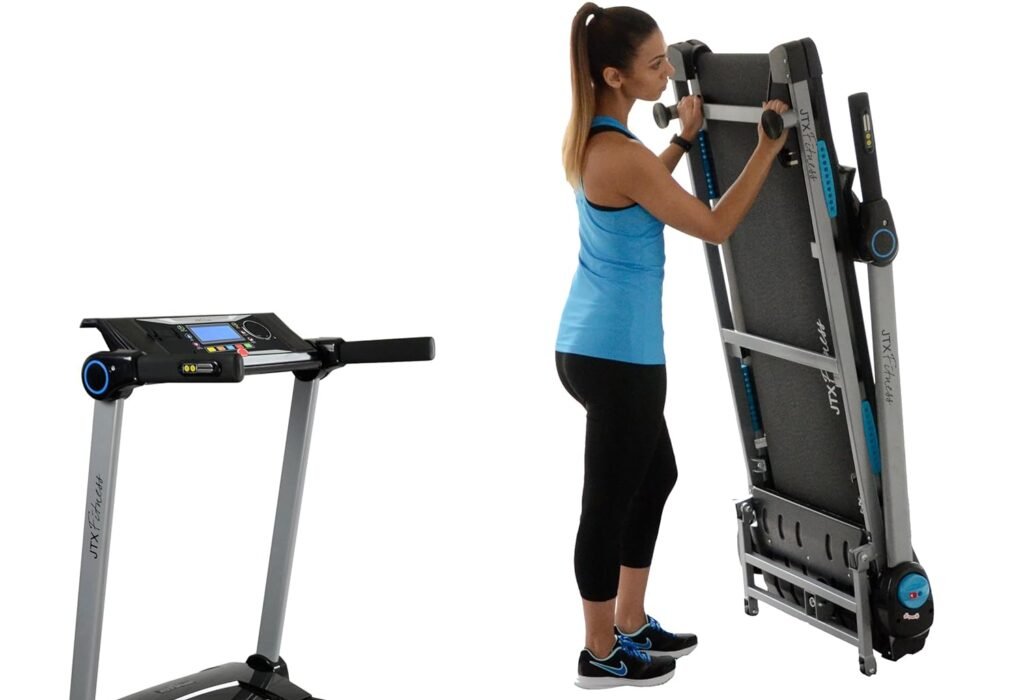
Finding time and space for regular exercise can be challenging, especially for people living in apartments, condominiums, or smaller homes. A compact foldable treadmill offers a practical solution by combining effective cardiovascular training with a space-saving design. As home fitness continues to grow in popularity, these treadmills have become one of the most sought-after pieces of exercise equipment for individuals who want to stay active without dedicating an entire room to a gym.
Unlike traditional treadmills that require a permanent location and substantial floor space, compact foldable models are designed to fit modern living environments. They provide many of the same workout benefits as larger machines while allowing users to fold and store the equipment when it is not in use. This flexibility makes them an excellent choice for homeowners seeking convenience, functionality, and long-term fitness value.
What Is a Compact Foldable Treadmill?
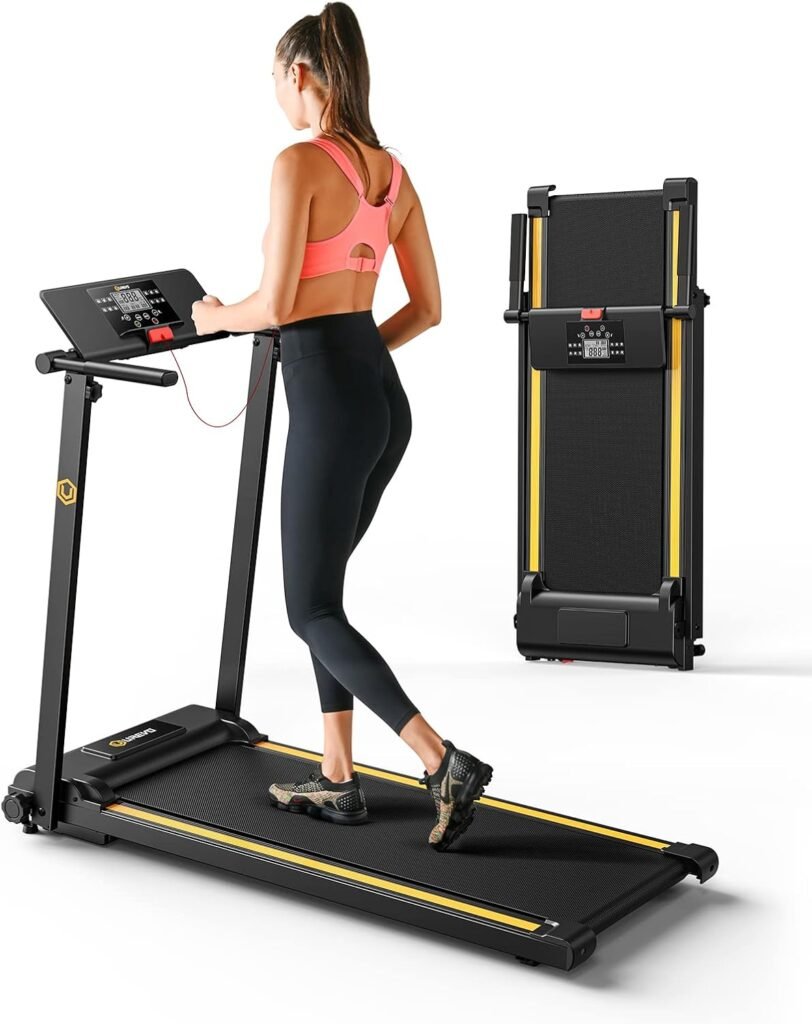
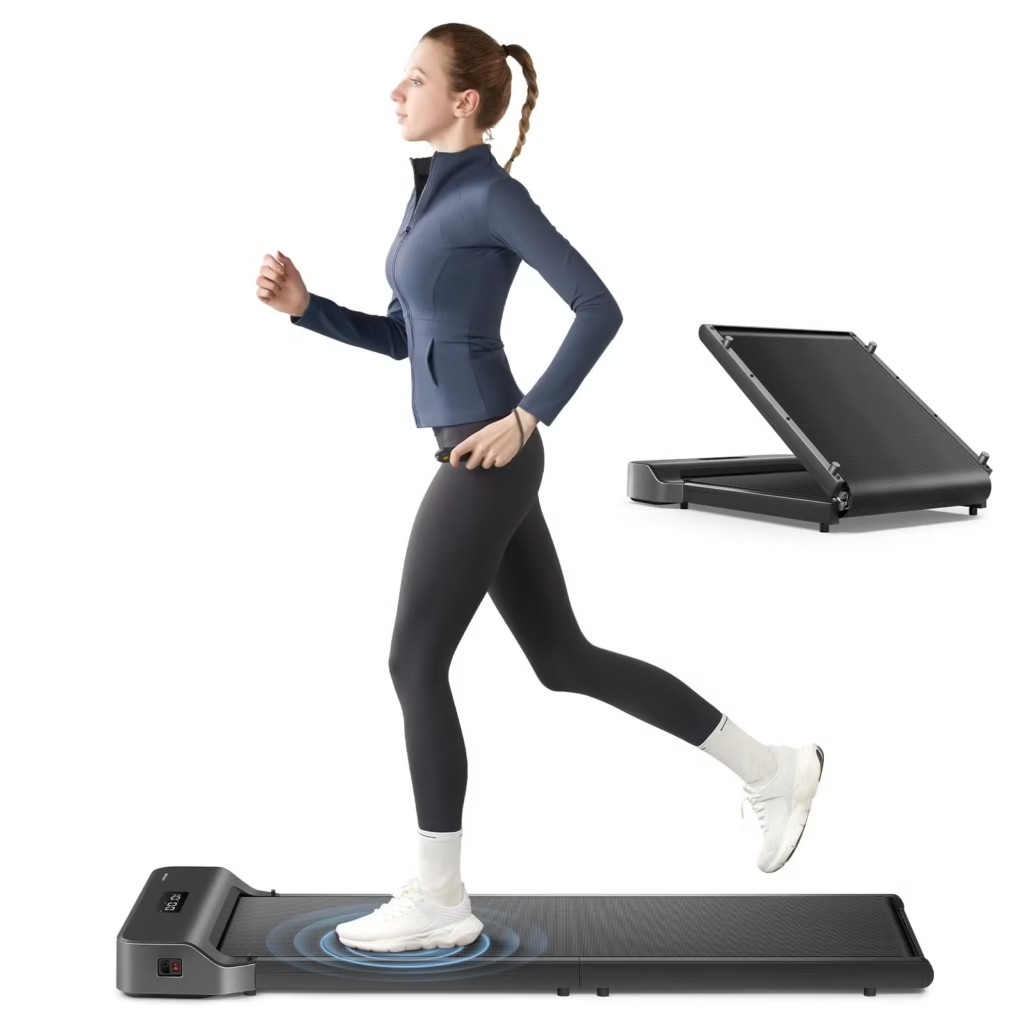
A compact foldable treadmill is a cardio training machine specifically engineered to minimize storage requirements. These treadmills feature folding decks, collapsible frames, or vertical storage systems that significantly reduce their footprint when not in use.
Most models are equipped with essential components such as:
- Running or walking deck
- Electric drive motor
- Shock absorption system
- Speed adjustment controls
- Digital performance display
- Safety emergency stop mechanism
Despite their smaller dimensions, many compact treadmills deliver reliable performance for walking, jogging, and moderate running workouts.
Why Homeowners Choose Compact Foldable Treadmills
Space Efficiency
The primary advantage of a compact foldable treadmill is its ability to fit into smaller living spaces. Many homeowners do not have dedicated fitness rooms, making equipment size a critical factor during the purchasing process.
After a workout, the treadmill can often be folded and stored against a wall, under a bed, or inside a closet. This allows users to reclaim valuable floor space for daily activities.
Convenient Home Workouts
Weather conditions, busy schedules, and commuting time can interfere with fitness routines. Having a treadmill readily available at home removes many of these obstacles.
Users can exercise before work, during lunch breaks, or in the evening without traveling to a gym. This convenience often leads to greater workout consistency and improved long-term fitness results.
Reduced Gym Membership Costs
While purchasing exercise equipment requires an initial investment, many homeowners appreciate the long-term savings. Eliminating or reducing gym membership fees can help offset the purchase cost over time.
For families, a single treadmill may serve multiple users, further increasing its overall value.
Important Features to Consider
Motor Power
The motor is one of the most critical components of any treadmill. Motor performance directly affects speed consistency, durability, and user experience.
Individuals who plan to walk regularly may require less motor power than those intending to run or perform interval training sessions. Selecting a motor that matches workout goals helps ensure reliable operation over many years.
Running Surface Dimensions
Even compact machines should provide a comfortable exercise area. A deck that is too short or narrow can negatively affect stride mechanics and workout confidence.
Taller users and runners typically benefit from longer running surfaces, while walking-focused users may be comfortable with more compact dimensions.
Shock Absorption Technology
Modern treadmills often include cushioning systems designed to reduce impact forces on joints. Effective shock absorption can enhance workout comfort and help minimize stress on the knees, ankles, and hips.
This feature is particularly valuable for beginners, older adults, and individuals returning to exercise after a long break.
Weight Capacity
Every treadmill is engineered with a maximum user weight limit. Exceeding this limit can accelerate component wear and reduce overall equipment lifespan.
Choosing a machine with an adequate weight capacity supports safer operation and improved structural durability.
Storage Mechanism
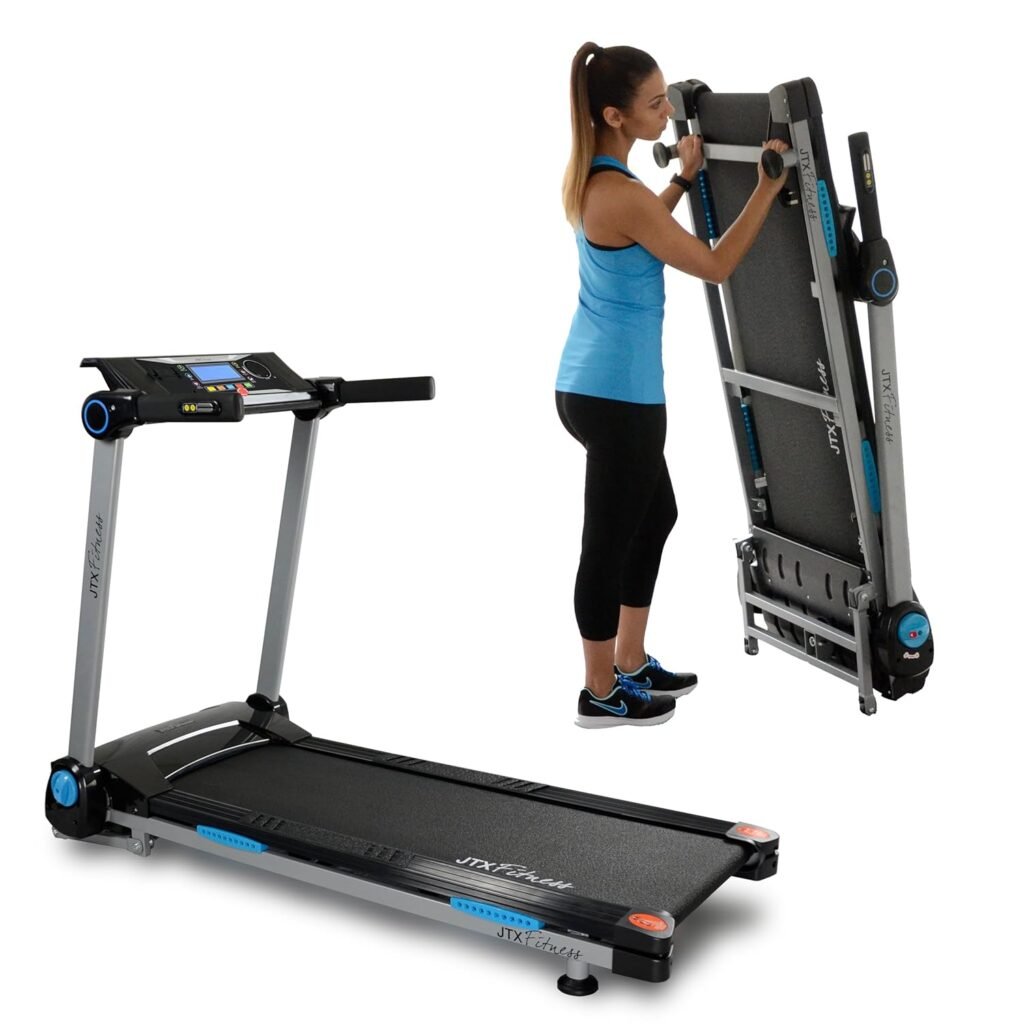
Not all folding systems are created equal. Some treadmills fold vertically, while others utilize hydraulic-assisted mechanisms that simplify lifting and lowering.
Homeowners should evaluate how frequently they expect to store the machine and select a design that supports easy daily use.
Common Buyer Mistakes
Focusing Only on Price
Budget considerations are important, but selecting the least expensive option can sometimes lead to disappointment. Lower-quality materials, weaker motors, and reduced stability may negatively affect performance.
Balancing affordability with durability often produces the best long-term value.
Ignoring Available Space Measurements
Many buyers evaluate only the folded dimensions of a treadmill. However, it is equally important to measure the space required during operation.
Users should account for clearance around the treadmill to ensure safe mounting, dismounting, and movement during workouts.
Overlooking Noise Levels
Noise can be a significant consideration in apartments and shared living environments. Motor operation, deck vibration, and foot impact all contribute to overall sound production.
Reading specifications and reviews can help identify quieter models suitable for residential use.
Maximizing Results with a Compact Treadmill
Create a Consistent Schedule
Consistency is often more important than workout intensity. Establishing a regular exercise schedule helps develop sustainable habits and improves cardiovascular fitness over time.
Even 20 to 30 minutes of walking several days per week can provide meaningful health benefits.
Use Interval Training
Many treadmills allow users to vary speed throughout a workout. Alternating between faster and slower periods can increase calorie expenditure and improve cardiovascular conditioning.
Interval sessions also help prevent workout boredom and maintain motivation.
Monitor Performance Metrics
Tracking distance, speed, duration, and estimated calorie burn can provide valuable feedback. Monitoring progress helps users stay focused on goals and celebrate improvements over time.
Maintenance and Care
Proper maintenance extends the lifespan of a compact foldable treadmill and helps maintain safe operation.
Recommended maintenance practices include:
- Cleaning the deck and frame regularly
- Inspecting hardware connections
- Checking belt alignment
- Following lubrication recommendations
- Keeping ventilation areas free from dust
- Performing routine safety inspections
Routine care not only improves equipment reliability but can also help preserve manufacturer warranty coverage.
Conclusion
A compact foldable treadmill offers an ideal balance between performance, convenience, and space efficiency. For homeowners seeking an effective cardio solution without sacrificing valuable living space, these machines provide an excellent alternative to traditional fitness equipment.
By carefully evaluating motor quality, deck size, cushioning systems, storage design, and overall durability, buyers can select a treadmill that supports their fitness goals for years to come. With consistent use and proper maintenance, a compact foldable treadmill can become one of the most valuable investments in a healthier and more active lifestyle.