Massage Gun for Muscle Recovery: How to Use It Safely and Effectively
September 23, 2026
A massage gun for muscle recoverycan look like an easy solution after a demanding workout. Your legs feel tired, your shoulders feel tight, and the device promises a quick way to apply percussion massage without booking a massage appointment.
The problem is that many people use massage guns too aggressively, for too long, or with unrealistic expectations. More pressure, a harder attachment, and a higher speed do not automatically produce better recovery.
Current research suggests that percussion massage may have some short-term effects on flexibility, range of motion, and certain recovery-related measures, but the evidence is still limited and results are not consistent across all outcomes. A systematic review published in 2023 included only 11 studies and found that most had a moderate risk of bias.
The practical goal, therefore, is not to treat the massage gun as a cure. It is to learn where it may fit into a sensible post-workout routine and how to avoid turning a comfort tool into another source of irritation.
The Problem: Your Muscles Feel Tired or Sore After Exercise
PROBLEM: You finish a workout and certain muscles feel tired, stiff, or uncomfortable. You want to feel better before your next session, so reaching for a massage gun seems logical.
Post-exercise discomfort can occur for many reasons. A new exercise, greater training volume, unfamiliar movements, or a harder-than-usual session can all leave muscles feeling different afterward.
That does not mean something is necessarily wrong, and it also does not mean every uncomfortable sensation should immediately be treated with percussion massage.
A massage gun mechanically delivers repeated pulses through an attachment placed against the body. For some users, that sensation feels relaxing and may make a muscle temporarily feel less stiff. Research has also investigated short-term changes in flexibility and range of motion after percussion massage.
But “feels better” and “has fully recovered” are not the same thing.
Why It Happens: Recovery Is More Complicated Than Muscle Soreness
Muscle recovery is not controlled by one device or one technique. Training stress, rest, nutrition, hydration, sleep, overall activity, and the amount of time between workouts can all influence how you feel and perform.
This is why massage-gun marketing can become misleading when it implies that percussion alone “accelerates recovery” in a universal or guaranteed way.
The research picture is more nuanced.
A 2023 systematic review reported possible benefits for short-term flexibility, range of motion, stiffness, and some recovery-related outcomes. However, it also found no consistent improvement in measures such as balance, acceleration, agility, or explosive activity, and the available evidence base was relatively small.
A separate controlled study of 65 active young adults tested five minutes of massage-gun use on one calf after strenuous lower-body exercise. Researchers found no significant benefit for the measured physical or perceived recovery outcomes and observed a small increase in perceived soreness in the treated leg at some time points.
That does not mean massage guns are useless. It means their effects should not be exaggerated.
Practical interpretation: Use percussion massage because it feels comfortable or fits your routine—not because you expect it to erase the physiological effects of a hard workout.
Warning Signs: When a Massage Gun Is Not the Right Response
One of the biggest mistakes is treating every uncomfortable sensation as ordinary post-workout soreness.
Stop using the massage gun and take the situation more seriously if you experience symptoms such as:
sharp or severe pain;
rapidly increasing pain;
significant swelling;
extensive bruising;
numbness or unusual tingling;
loss of normal movement or strength;
pain after a significant impact or injury;
skin damage or an open wound;
unexplained symptoms that do not resemble your normal post-exercise experience.
A massage gun should not be used as a way to “push through” warning signs.
There are also published reports of serious adverse events after inappropriate percussion-massage use. One medical case report described severe rhabdomyolysis following percussion massage after exercise. A case report cannot establish how common such events are, but it reinforces an important point: aggressive percussion is not harmless simply because the device is sold for home use.
⚠ Warning: Avoid using a massage gun directly over injured tissue, open wounds, obvious bruising, bones, joints, the front or sides of the neck, or other sensitive areas unless the manufacturer’s instructions and appropriate professional guidance specifically support that use.
If you have a diagnosed medical condition, recent surgery, significant injury, or another situation that could affect the safety of percussion massage, speak with an appropriate healthcare professional before using the device.
Common Mistake #1: Using Maximum Intensity Because It Feels More Powerful
Massage guns often offer several intensity or speed settings. It is easy to assume that the highest setting must provide the strongest recovery effect.
That is not supported by the available evidence.
A more practical approach is to use the lowest comfortable level that provides the sensation you want. If the device causes you to tense the muscle, pull away, hold your breath, or tolerate significant discomfort, the setting may be too aggressive.
Before:
Immediately selecting the highest setting.
Pressing heavily into the muscle.
Believing discomfort means the treatment is working.
After:
Start conservatively.
Let the device provide the percussion rather than forcing it deeply into the tissue.
Increase intensity only when it remains comfortable and is consistent with manufacturer instructions.
One recent randomized crossover study involving 35 recreationally active adults found changes in lower-body flexibility under specific percussion protocols, but the tested speeds, application times, and schedule belonged to that particular research protocol. They should not be interpreted as a universal prescription for every user or every massage gun.
Common Mistake #2: Staying on One Spot for Too Long
Holding the massage gun against one small area for an extended period can turn a comfortable sensation into unnecessary irritation.
Unless your product instructions say otherwise, use smooth, controlled movement across an appropriate muscle area rather than treating one tender point as something that must be “broken up.”
A simple approach is:
Choose an appropriate attachment.
Select a comfortable intensity.
Place the attachment against the intended muscle area.
Move it gradually rather than forcing it into one point.
Stop if the sensation becomes painful or irritating.
Session duration should follow your specific manufacturer’s guidance. Different devices, attachments, speeds, and intended body areas may have different recommendations.
Common Mistake #3: Using the Massage Gun Directly on Bones and Joints
Percussion massage is generally intended for appropriate soft-tissue areas, not for hammering directly against bony landmarks.
Areas such as the shin bone, kneecap, ankle bones, spine, and other prominent bony structures can feel particularly unpleasant under repeated percussion.
If you are using the device around a large muscle group, stay aware of the anatomy underneath the attachment and follow the manufacturer’s body-area guidance.
⚠ Common Mistake: Do not assume that because the device can physically reach an area, that area is appropriate for percussion massage.
Common Mistake #4: Treating Soreness as Something You Must Eliminate
A massage gun can become counterproductive when every normal post-workout sensation triggers an aggressive recovery session.
Sometimes your best response after exercise may simply be:
rest;
light comfortable movement;
adequate food and fluids;
sleep;
allowing sufficient time before another demanding session.
A massage gun can be added when it feels useful, but it should not replace those fundamentals.
Think of percussion massage as an optional part of recovery rather than the foundation of recovery.
Common Mistake #5: Expecting the Massage Gun to Improve Every Type of Performance
The available literature does not support the claim that massage-gun use universally improves athletic performance.
The 2023 systematic review found potentially favorable effects on flexibility and some recovery-related outcomes, while improvements were not consistently demonstrated for strength, balance, acceleration, agility, and explosive activity.
This distinction is important if you are thinking about using the device immediately before a workout.
Feeling looser does not automatically mean you will run faster, lift more, jump higher, or perform every movement better.
The Solution: Use the Massage Gun as a Controlled Comfort Tool
SOLUTION: Instead of trying to “fix” your muscles, use a massage gun conservatively as one optional part of a broader recovery routine.
For a general post-workout session, the process can be straightforward.
Identify an appropriate muscle area. Use the device only on areas permitted by its manufacturer.
Choose a suitable attachment. Follow the manufacturer’s intended use for each attachment rather than guessing.
Start at a lower intensity. You can adjust gradually if needed.
Maintain light, controlled contact. Avoid aggressively forcing the device into the tissue.
Move across the muscle. Do not repeatedly attack one uncomfortable spot.
Monitor how you feel. Reduce intensity or stop if the sensation becomes painful.
Follow recommended session limits. Use the duration guidance supplied with your device.
The aim should be a comfortable percussion sensation, not a contest to see how much pressure you can tolerate.
Before vs. After: A More Practical Recovery Routine
Before: Aggressive Approach
After: Controlled Approach
Use maximum intensity immediately
Begin with a comfortable lower setting
Push hard into sore tissue
Use controlled contact
Stay on one painful point
Move gradually across an appropriate muscle area
Assume pain means effectiveness
Stop if percussion becomes painful
Use it on every uncomfortable area
First decide whether percussion is appropriate
Expect immediate complete recovery
Treat it as one optional comfort tool
Ignore rest and sleep
Keep basic recovery habits as the foundation
The “after” approach may seem less dramatic, but it is much closer to what the limited evidence and basic safety principles support.
Best Practices: Choosing the Right Attachment
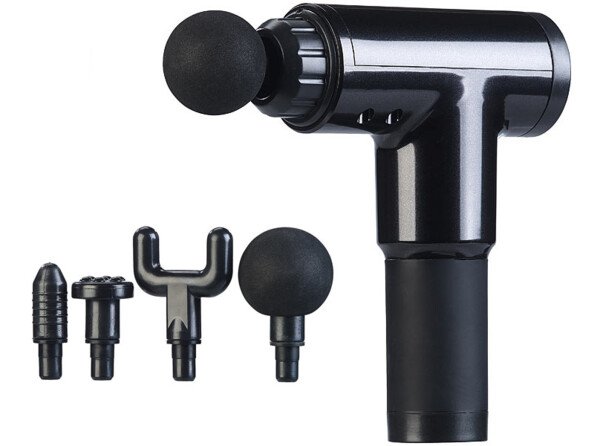
Massage guns frequently come with several attachment shapes, but there is no universal attachment standard across manufacturers.
You may see broad, rounded, flat, narrow, or fork-shaped attachments. Their intended uses can differ between brands.
Instead of assuming that one shape is always for the calves or another is always for the back, check your specific device instructions.
A useful attachment should:
feel comfortable on the intended area;
be permitted for that area by the manufacturer;
allow controlled contact;
attach securely to the device;
be easy to clean according to product instructions.
Do not choose the narrowest or hardest attachment simply because you want a “deeper” sensation.
Best Practices: Use Intensity as a Control, Not a Goal
The intensity settings are there to let you adjust the experience. They are not levels you need to conquer.
If a lower setting provides a comfortable massage sensation, there may be no practical reason to increase it.
Ask yourself:
Can I keep the target muscle relaxed?
Does the percussion feel comfortable?
Am I avoiding pain?
Can I control the device easily?
Does the setting match the manufacturer’s guidance?
If the answers are yes, the setting is doing its job.
Best Practices: Know When to Use It
A massage gun can be used at different points around exercise, depending on the manufacturer’s instructions and your goals. Research has examined both pre-activity and post-activity use, but protocols differ substantially, which is one reason universal timing recommendations are difficult to make.
For post-workout use, consider the device when:
you enjoy the sensation of percussion massage;
the muscles feel generally tired rather than injured;
you can use it comfortably without excessive pressure;
it fits naturally into your normal recovery routine.
Skip it when percussion makes the area feel worse or when symptoms suggest something other than ordinary exercise-related discomfort.
Best Practices: Do Not Ignore the Rest of Recovery
A massage gun may be convenient, but the basic ingredients of recovery remain much less exciting.
Your broader routine may include:
appropriate rest between demanding sessions;
adequate sleep;
sufficient nutrition;
hydration appropriate to your activity and circumstances;
gradual training progression;
light activity when appropriate;
adjusting future workouts when your body has not recovered as expected.
No massage attachment compensates for repeatedly training beyond your ability to recover.
If soreness occurs after nearly every session and routinely interferes with normal activity or subsequent workouts, the more useful question may be whether your training load needs adjustment—not which massage-gun setting you should use.
How to Choose a Massage Gun for Muscle Recovery
If you are buying a massage gun for muscle recovery, avoid focusing only on maximum speed or the number of attachments.
Consider features that affect real-world use:
Intensity control: Can you select a comfortable level?
Ergonomics: Can you hold and control the device easily?
Weight: Will it become uncomfortable to hold during normal use?
Attachments: Are they useful for the areas you intend to massage?
Noise: Is the operating sound acceptable in your home?
Battery: For cordless models, check the manufacturer’s stated operating and charging information.
Controls: Are settings simple to change?
Portability: Will you take it to the gym or travel with it?
Cleaning: Can the contact attachments be maintained easily?
Instructions: Does the manufacturer clearly explain safe body areas, session guidance, and contraindications?
Do not assume more attachments or higher advertised percussion speeds automatically mean a better product. For many users, comfortable handling and intuitive controls matter much more.
When Muscle Recovery Needs More Than a Massage Gun
Normal exercise discomfort and an injury are not interchangeable.
A massage gun cannot diagnose why something hurts, determine whether tissue is injured, or tell you whether it is safe to continue training.
If you have persistent or worsening pain, significant swelling, loss of function, severe bruising, neurological symptoms, or another concerning change, stop trying to solve the issue with percussion massage and seek appropriate medical assessment.
The same principle applies if you are recovering from surgery or managing an existing medical condition. In those situations, individualized professional advice is more appropriate than experimenting with a massage gun routine.
A Better Way to Think About Massage-Gun Recovery
The most useful way to approach a massage gun for muscle recovery is to lower the expectations and improve the technique.
PROBLEM: Your muscles feel tired after exercise, so it is tempting to attack them with maximum percussion and expect the device to accelerate recovery dramatically.
SOLUTION: Use comfortable intensity, appropriate body areas, controlled movement, and manufacturer-recommended session limits. Treat percussion massage as an optional addition to rest, sleep, nutrition, sensible training progression, and other basic recovery habits.
Research suggests massage guns may provide some short-term benefits for flexibility, range of motion, and certain recovery-related measures, but results vary, study quality is limited, and not every experiment has found meaningful recovery benefits.
That is actually useful information for a buyer. You do not need to chase the strongest device or endure uncomfortable sessions. A massage gun earns its place in your routine when it is easy to use, comfortable, appropriate for the area, and helps you create a recovery routine you actually enjoy.
Safety Note: A massage gun is not a medical treatment or diagnostic device. Avoid using it on injured or damaged tissue, sensitive anatomical areas, or areas prohibited by the manufacturer. Stop if percussion causes pain, bruising, numbness, worsening symptoms, or other concerning effects. If you have an injury, medical condition, recent surgery, or uncertainty about safe use, consult an appropriate healthcare professional.