Massagers: How a Simple Evening Routine Became a Moment of Everyday Relaxation
October 28, 2026
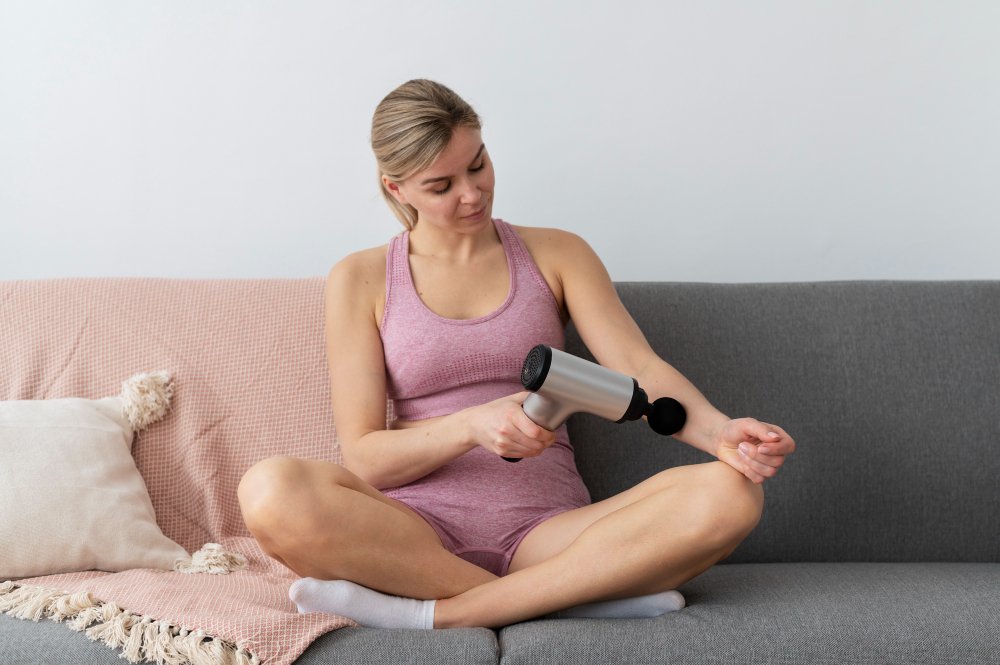
It was nearly nine in the evening when Emma finally closed her laptop. The day had been a familiar combination of work meetings, household responsibilities, and a short workout squeezed between everything else. Now, sitting on the edge of her sofa, she noticed how tense her shoulders felt.
On the coffee table sat a small handheld massager she had purchased several weeks earlier. She had tried it once, found the settings confusing, and placed it back in its box.
Tonight, she decided to give it another chance.
What followed wasn’t a dramatic transformation. There was no instant solution to tired muscles or a complicated wellness program. Instead, Emma began discovering something more practical: how choosing and using the right massager could make a few quiet minutes at home feel more comfortable.
Emma’s story is a fictional, illustrative scenario designed to explain common choices and considerations when using home massagers.
The First Evening: Discovering That More Intensity Isn’t Always Better
Emma picked up the massager, switched it on, and immediately selected the highest intensity. The device vibrated strongly against her upper shoulder, and she instinctively pulled it away.
It wasn’t the experience she had imagined.
She had assumed that stronger massage meant better results. After all, many product descriptions emphasize power, speed settings, and deep massage sensations. But as she experimented, she realized that maximum intensity wasn’t necessarily comfortable.
She turned the device off, opened the manufacturer’s instructions, and reviewed the recommended settings and body areas. Then she restarted at a lower intensity, applying it only to an appropriate muscle area.
This time, the sensation was gentler and easier to control.
“A comfortable massage doesn’t need to be the strongest massage.”
That became Emma’s first practical lesson. A home massager should provide a comfortable experience, not encourage you to tolerate pain.
She also learned that a massager isn’t intended to diagnose or treat unexplained pain. Sharp discomfort, significant swelling, numbness, or symptoms following an injury are reasons to stop and seek appropriate guidance rather than increase the setting.
The Next Morning: Understanding Different Types of Massagers
The following morning, Emma became curious about other massage devices. Her handheld model worked for some accessible areas, but holding it at an awkward angle made certain positions inconvenient.
She started comparing different types of massagers, and quickly discovered that the category was much broader than she expected.
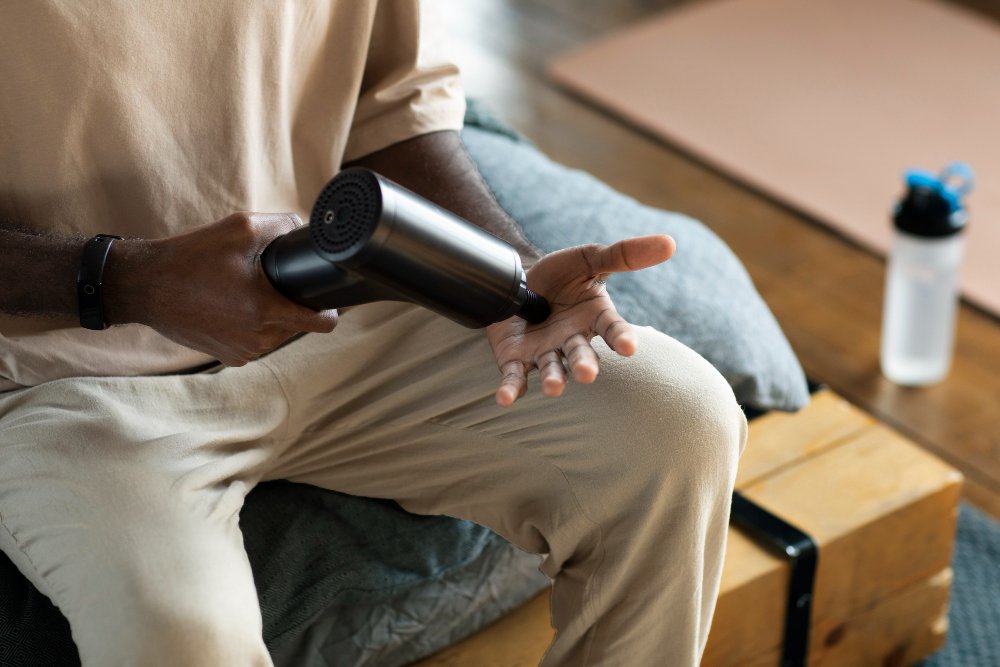
Handheld massagers offered flexibility because the user could move the device between permitted body areas. However, weight, grip, and reach mattered. A device that feels manageable for a brief demonstration may become tiring to hold during regular use.
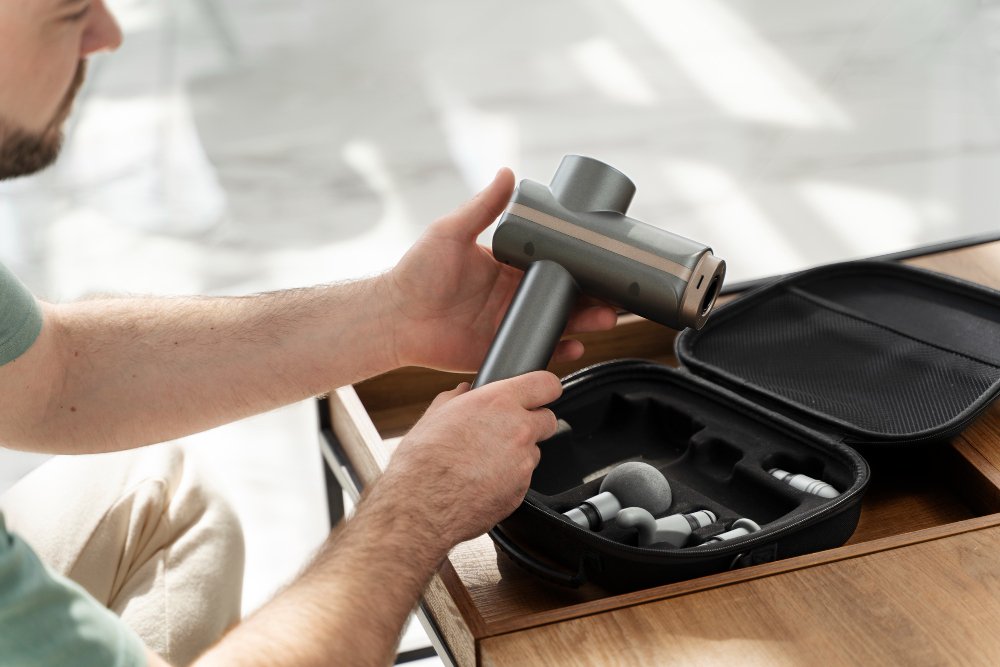
Percussion massage guns used repeated pulses delivered through interchangeable attachments. Emma noticed that manufacturers offered different speed settings and attachment shapes, but she also learned that not every attachment was suitable for every body area.
Foot massagers appealed to her because they could be used while seated. Some designs used rollers, compression, vibration, or combinations of mechanisms. She realized that a foot massager was a different experience from holding a device against a specific muscle.
Neck and shoulder massagers came in wearable, pillow-like, and cushion-style designs. Their intended placement varied, making manufacturer instructions particularly important around sensitive areas.
Massage cushions and seat massagers seemed practical for someone who preferred sitting comfortably rather than holding a device. Some included vibration, moving massage mechanisms, or optional warmth.
For the first time, Emma stopped asking which massager was the most powerful.
Instead, she asked herself, Which type would I actually enjoy using?
Day Three: Learning Why Design Matters More Than Extra Features
By the third evening, Emma had noticed something interesting. The most convenient feature of her handheld massager wasn’t its highest setting or the number of accessories included in the box.
It was the handle.
When she could hold the device comfortably and reach an appropriate muscle area without twisting her wrist, the experience felt easier. When she tried to reach an awkward position, using it became frustrating.
That observation changed how she evaluated massage equipment.
She began considering practical questions that weren’t always obvious in product photographs. Was the device heavy? Could the controls be adjusted without changing grip? Was it cordless? How noisy was it? Could the attachments be cleaned according to the manufacturer’s instructions?
She also considered storage. A large device might offer additional features, but it would be less convenient in her small living room if she needed to unpack and rearrange furniture every time she wanted to use it.
Emma’s emerging checklist was simple: comfortable handling, useful controls, suitable body-area guidance, manageable noise, and storage that matched her home.
The lesson was clear: more features don’t automatically create a better everyday experience.
The First Weekend: Creating a Routine That Felt Natural
On Saturday evening, Emma decided to stop treating her massager like a gadget that needed constant experimentation.
She put her phone aside, sat comfortably, and took a few minutes to unwind after the day. Before switching on the device, she checked that the attachment was secure and that the intended area was appropriate according to the instructions.
She started with a comfortable setting and followed the manufacturer’s guidance on technique and session duration. Rather than pressing harder whenever she encountered a tense-feeling area, she maintained controlled contact.
When the sensation became uncomfortable, she reduced the intensity or stopped.
Afterward, she put the massager away and continued her evening. There was no attempt to measure an instant physical transformation.
Instead, the routine offered something she appreciated: a deliberate moment away from her usual responsibilities.
Maybe the value wasn’t in doing more, she thought, but in making a little space for something comfortable.
That didn’t mean the massager had solved every cause of her tiredness. Sleep, workload, physical activity, and daily habits still mattered. The device was simply an optional part of how she chose to relax.
Week Two: Realizing That Different Situations Need Different Approaches
During the second week, Emma tried using her massager after a light home workout. Her legs felt generally tired, and she wondered whether the device could become part of her post-exercise routine.
She had seen advertisements promising faster muscle recovery and dramatic improvements in performance. But after reading more carefully, she realized that research on massage devices, particularly percussion massage guns, was still developing.
Some studies have explored short-term changes in flexibility, range of motion, perceived soreness, and other recovery-related measures. However, findings vary, and the available evidence doesn’t establish that massage devices consistently accelerate recovery or improve athletic performance for everyone.
Emma decided to use the device for a comfortable massage sensation rather than expect it to erase the effects of exercise.
She also avoided applying percussion to bones, joints, injured areas, or other sensitive locations where the manufacturer did not recommend use.
On days when her body felt unusually uncomfortable, she didn’t try to force a massage session. Instead, she considered whether rest or a change in her exercise routine would be more appropriate.
Gradually, she began to see the massager as one optional comfort tool rather than a replacement for sensible recovery habits.
Week Three: The Mistakes She Stopped Making
By the third week, Emma had become more confident using her device. Interestingly, most of her progress came from doing less rather than more.
She no longer automatically selected the strongest setting. She didn’t hold the device against one spot indefinitely, and she stopped trying to reach areas that required awkward twisting.
She also learned to pay attention to warning signs.
Ordinary post-workout tiredness was one thing. Sharp pain, unexplained swelling, significant bruising, numbness, or worsening discomfort were different situations. A massager wasn’t an appropriate way to investigate those symptoms.
Emma began following a few straightforward principles:
Use the device only on body areas approved by the manufacturer.
Choose a comfortable intensity instead of the maximum setting.
Follow the recommended application technique and session limits.
Stop if massage causes pain or irritation.
Keep the device clean and maintained according to its instructions.
She also paid attention to the equipment itself. If an attachment felt loose, the device sounded unusual, or a control stopped responding properly, she wouldn’t continue using it until the issue was resolved.
These weren’t complicated habits, but they made the experience more predictable.
One Month Later: What Actually Changed?
Four weeks after rediscovering her handheld massager, Emma looked back at the first evening when she had immediately selected maximum intensity.
Her expectations had changed considerably.
At the beginning, she wanted the device to deliver an intense massage that would somehow make every tired muscle feel completely refreshed. Now, she understood that a home massager couldn’t promise that outcome.
What had changed was her approach.
She knew which settings felt comfortable, which permitted areas she could reach easily, and when she would rather skip the device entirely. She no longer treated the number of attachments or the highest intensity as proof of quality.
Her routine had also become easier to maintain because it was simple. She didn’t need a dedicated room, a long session, or a complicated schedule.
Importantly, these were illustrative changes in convenience, comfort, and routine, not measured medical or fitness outcomes. Emma’s fictional experience should not be interpreted as evidence that massagers produce specific health benefits.
“The biggest improvement wasn’t finding a more powerful setting. It was understanding what felt comfortable and when to stop.”
What Emma Would Look for When Buying a New Massager
Eventually, Emma considered whether another type of massager might better suit her needs.
This time, she wouldn’t begin by comparing the most impressive marketing claims. She would start with her daily routine.
If she wanted something for occasional use on accessible muscle areas, a lightweight handheld model might be practical. If she preferred a seated experience, she might compare foot massagers or massage cushions. If she specifically wanted percussion massage, she would examine attachment guidance, intensity controls, ergonomics, and manufacturer safety information.
She would also look at the less exciting details: cleaning requirements, operating noise, charging arrangements, warranty terms, and storage space.
And she would avoid assuming that every massager labeled “deep tissue” was necessarily more effective or suitable for her.
The right device would be the one that matched her intended use, physical comfort, and home environment.
The Evening Routine That Finally Made Sense
Another busy evening arrived. Emma finished work, tidied the kitchen, and sat down with a cup of tea.
The massager was nearby, but this time she didn’t feel obligated to use it. Some evenings, she enjoyed a brief comfortable session. Other evenings, she preferred reading, stretching gently, or simply resting.
That flexibility was part of what made the routine sustainable.
Her experience illustrated a broader point about massagers for home use: their practical value depends on choosing an appropriate device, understanding how it works, and using it responsibly.
Whether you’re comparing massage guns, handheld massagers, foot massagers, or massage cushions, begin with the experience you want rather than the strongest advertised feature.
Think about where you’ll use the device, how easy it is to handle, what areas the manufacturer permits, and whether its controls feel comfortable. Remember that a massager may offer a pleasant relaxation experience, but it is not a guaranteed solution for muscle recovery, pain, or medical conditions.
For Emma, what started as an unused device in a box became a small, optional part of her evening.
Sometimes, making a routine more comfortable begins not with a bigger promise, but with a simpler expectation.Safety Note: Always follow the manufacturer’s instructions, body-area restrictions, and session limits. Avoid using massage devices on injured tissue, open wounds, significant bruising, or sensitive anatomical areas unless specifically cleared by an appropriate healthcare professional. Use caution with heat settings, and never use heated massage equipment while sleeping. Stop if you experience pain, numbness, dizziness, skin irritation, or worsening symptoms. Consult a healthcare professional if you have an injury, recent surgery, a medical condition, or uncertainty about safe use.