
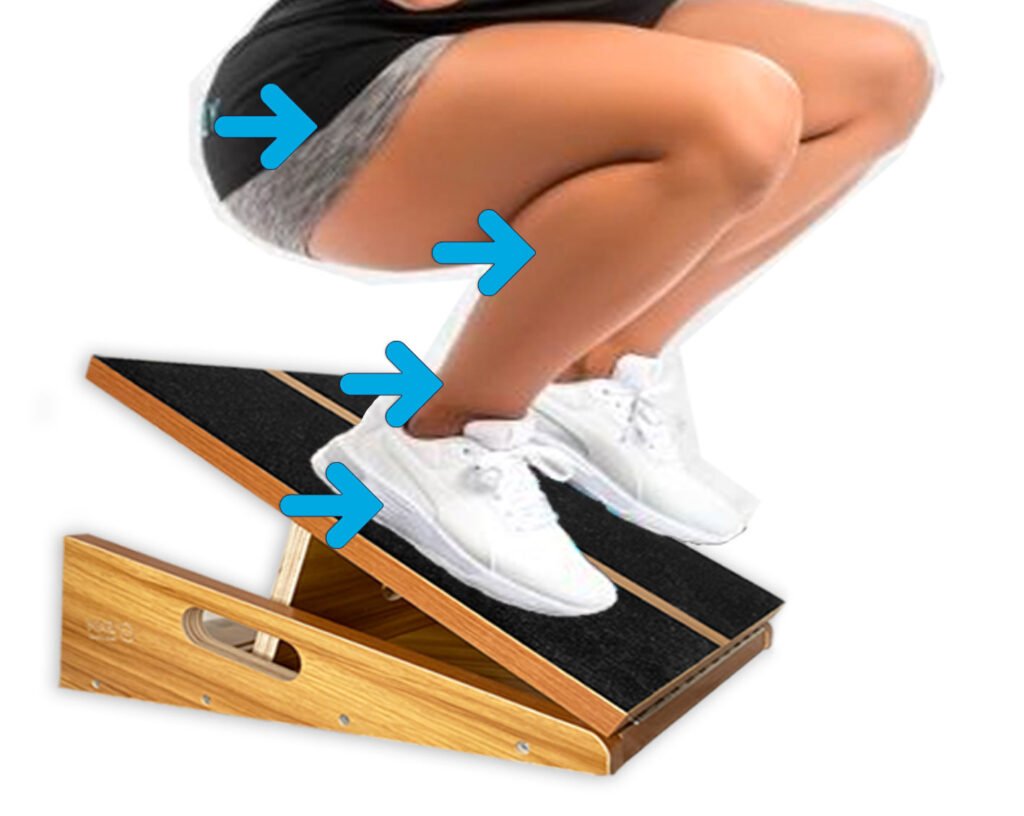
What Does a Slant Board Do for Calf Stretching?
A slant board creates an inclined surface for your feet. When you stand with your heels lower than your toes, your ankles move into a position that can create a stretching sensation through the calves. The main advantage is consistency. Instead of trying to recreate the same position against a wall, on a stair edge, or with an improvised wedge, you have a defined surface beneath your feet. Depending on the design, a slant board may also let you change the incline. This can be especially useful when several people use the same board or when you want to begin conservatively and adjust the position gradually.“The best slant board angle is not the steepest one—it is the one that lets you maintain a controlled, comfortable stretch with stable positioning.”Think of the board as a positioning tool rather than a shortcut. It does not make stretching automatically better. It simply gives you a convenient way to establish and repeat a particular foot and ankle position.
Why Use a Slant Board Instead of Stretching on a Step?
You certainly do not need a slant board to stretch your calves. Traditional wall stretches and other simple techniques remain practical options. So why would you consider adding a board? For many home users, the answer is convenience and repeatability.- A predictable angle: An adjustable board can make it easier to repeat a preferred incline.
- A dedicated standing surface: You are not relying on the narrow edge of a stair or another improvised object.
- Simple setup: Place the board on an appropriate surface, check its stability, and it is ready to use.
- Multiple exercise possibilities: Depending on your goals and experience, slant boards can also be incorporated into certain squat or mobility exercises.
- Compact storage: Many designs require considerably less room than larger pieces of home fitness equipment.
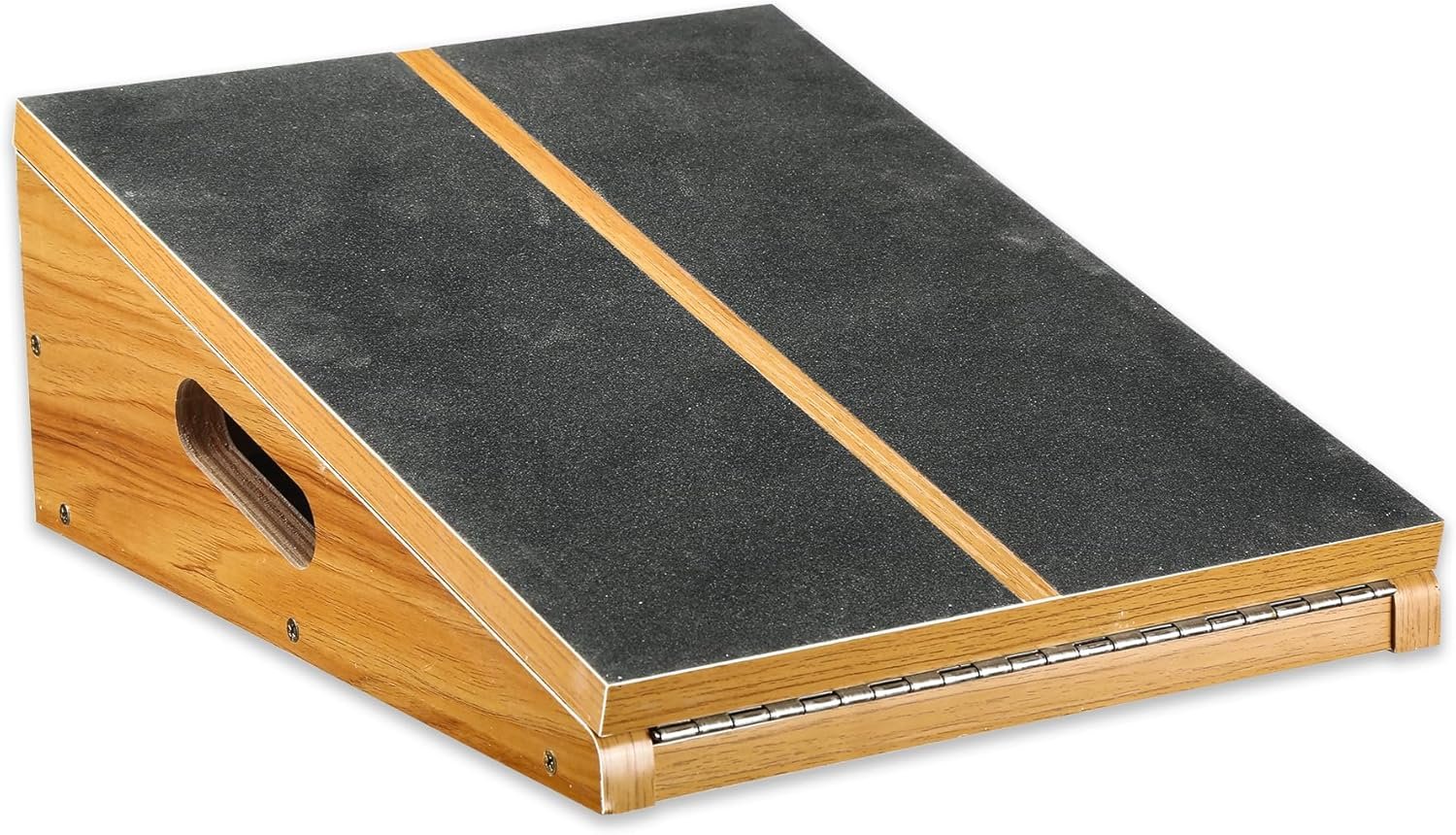
How to Use a Slant Board for Calf Stretching
Using the board looks straightforward: step onto the incline and stretch. In practice, a few details make the experience much more controlled. Start by placing the slant board on a flat, stable surface. Before putting your full weight on it, make sure the board does not rock, slide, fold unexpectedly, or shift under pressure. If the board is adjustable, begin with a relatively gentle angle rather than automatically selecting its maximum incline. For a basic standing calf stretch:- Step onto the board carefully.
- Position your feet securely on the intended standing surface.
- Keep your heels supported according to the board’s design.
- Stand tall rather than aggressively leaning forward.
- Use a wall, rail, or other secure support if you need help with balance.
- Move only far enough to feel a comfortable stretch.
- Avoid bouncing or forcing yourself deeper into the position.
How Steep Should Your Slant Board Be?
This is one of the first questions new users ask—and there is no universal angle that is right for everyone. A steeper incline changes the ankle position and may make the stretch feel substantially more intense. That does not automatically make it more effective for your needs. When choosing an angle, consider:- your current flexibility;
- your comfort level;
- your ability to maintain balance;
- whether you can keep your feet securely positioned;
- the particular movement you are performing;
- the manufacturer’s instructions for the board.
Keep Your Knees and Body Position in Mind
Your feet are not the only thing that matters during a calf stretch. Small changes in knee and body position can change how the stretch feels. For example, stretching with a straighter knee can feel different from using a slightly bent-knee position. Rather than chasing one supposedly perfect position, pay attention to control and follow an exercise approach appropriate for your goals. Try not to compensate for an incline that is too demanding. If you have to twist your hips, lift your heels away from the intended position, grip desperately for balance, or force your body forward, consider reducing the angle or changing your setup.
Quick Tip: If you are thinking more about staying on the board than about the stretch itself, simplify the setup. Use a lower incline and position yourself near a secure support until the movement feels controlled.
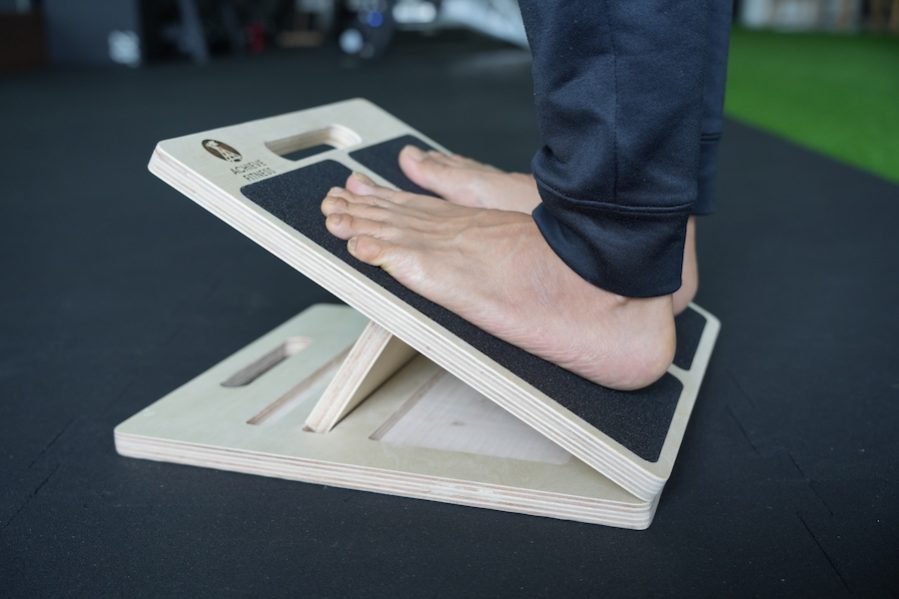
What to Look for in a Slant Board for Calf Stretching
If you are shopping for a slant board, do not judge it only by appearance or the number of incline positions advertised. A useful board should fit your intended exercises, body position, available space, and storage needs. Stability should come first. The board should feel secure when used as directed. Check the manufacturer’s instructions and specified weight capacity rather than assuming every board can support every user or exercise. Next, look at the standing surface. Adequate grip can help your shoes or feet remain securely positioned. Also consider whether the platform dimensions are appropriate for your intended use. Other useful buying considerations include:- Adjustability: Useful if you want multiple incline choices.
- Adjustment mechanism: It should lock or position securely according to the manufacturer’s design.
- Surface grip: Look for a surface intended to provide stable foot placement.
- Base design: Consider how the board interacts with the floor where you plan to use it.
- Weight capacity: Verify the manufacturer’s stated limit.
- Materials: Compare construction and care requirements rather than assuming wood, plastic, or metal is automatically superior.
- Platform size: Make sure the usable area fits your intended stance.
- Portability: Important if you expect to move it between rooms or take it with you.
- Storage: Folding or compact designs may be more convenient in small home gyms.
Common Slant Board Mistakes to Avoid
A simple piece of equipment can still be used poorly. Fortunately, many mistakes are easy to recognize. Starting too steep. A high incline can look like the “advanced” choice, but intensity is not a score. Choose an angle that allows control. Using the board on an unstable surface. A board that moves underneath you creates an unnecessary safety concern. Check both the board and the floor before beginning. Bouncing into the stretch. More movement does not necessarily mean a better stretch. Unless you are following a specific professionally designed exercise protocol, avoid aggressively bouncing into uncomfortable positions. Ignoring the rest of your posture. If your entire body is contorting to maintain the position, reconsider the incline and your stance. Copying someone else’s setting. Your preferred incline does not need to match another person’s. Flexibility, experience, comfort, and intended exercise can all differ. Ignoring the manufacturer’s instructions. Different boards use different adjustment mechanisms and have different intended uses. Check how your particular model is supposed to be assembled, adjusted, positioned, and loaded.Can Beginners Use a Slant Board?
Yes, a slant board can be approachable for beginners when it is used conservatively and according to its instructions. In fact, adjustability can make certain boards particularly convenient because you can select a less demanding starting position. If you are new to the equipment, keep your first sessions simple:- learn how the board adjusts before standing on it;
- confirm that all adjustable parts are securely positioned;
- use a stable support when needed;
- choose a comfortable incline;
- focus on controlled positioning rather than maximum stretch;
- increase difficulty gradually rather than abruptly.
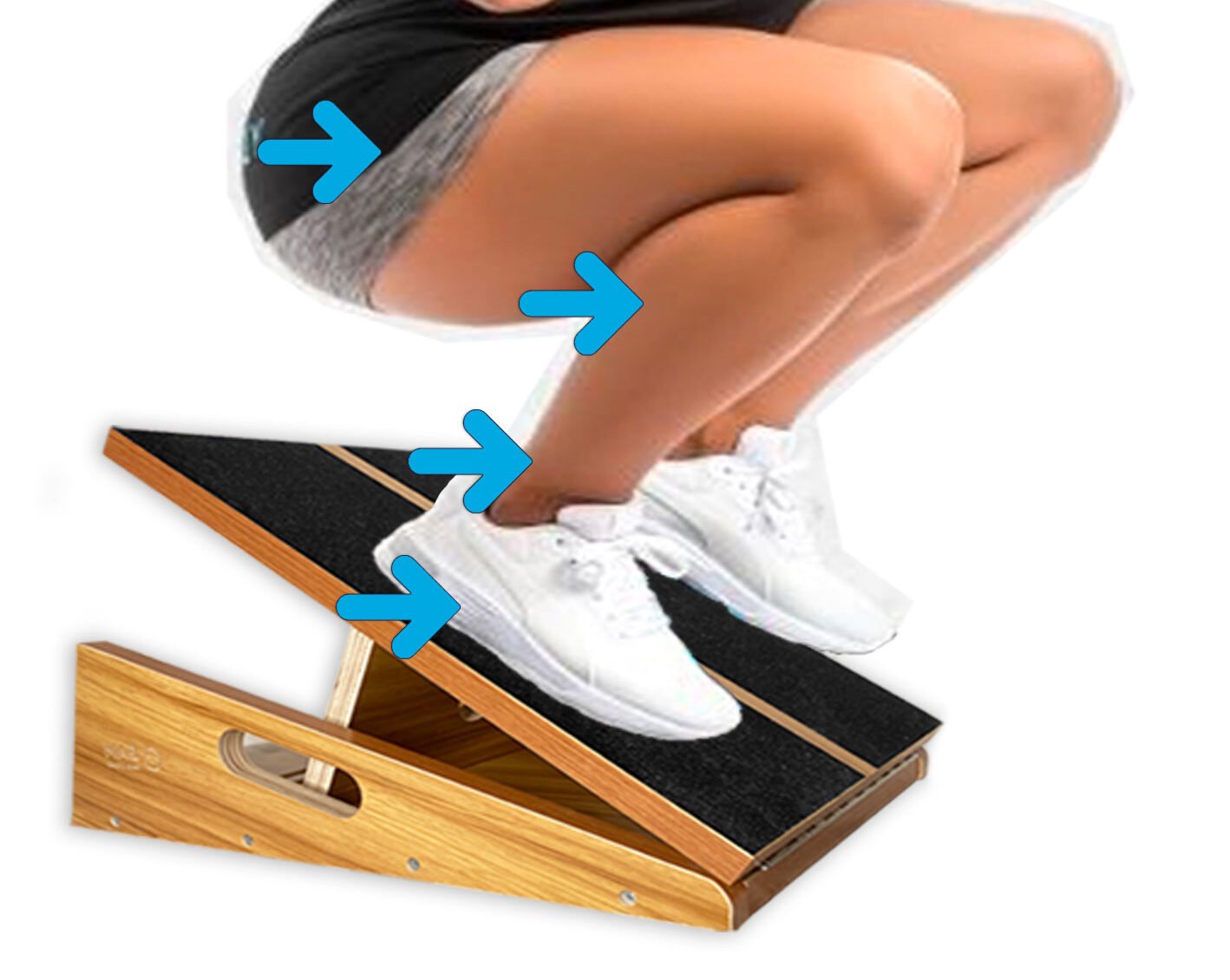
Where Should You Use and Store a Slant Board?
A slant board is compact, but location still matters. You need enough surrounding room to step on and off safely, and you may want a stable wall or support nearby if balance is a concern. Before each use, check the floor. The board should not be placed where it can unexpectedly slide or rock. Follow the manufacturer’s guidance regarding suitable surfaces and any anti-slip components included with the product. Storage is another reason to consider dimensions before buying. Ask yourself where the board will actually live when you are not stretching. Under a bed, inside a closet, beside other gym equipment, or permanently in your workout area? Equipment that is easy to access may also be easier to incorporate into a routine. At the same time, do not leave it in a walkway where someone could trip over it.Do You Need an Adjustable Slant Board?
Not necessarily. A fixed-angle board offers simplicity. There are no settings to change, and if the incline already suits your intended use, that may be all you need. An adjustable board gives you more flexibility. It may make sense when:- several people will use the same board;
- you want to experiment with different comfortable positions;
- your exercises call for different inclines;
- you prefer equipment that can adapt as your routine changes.