Best Slant Board Exercises: Practical Exercises for Beginners
September 30, 2026
A slant board is a simple piece of equipment, but it can be used in several different ways. Some people buy one for calf stretching, others use heel elevation during squats, and many simply want a compact tool for ankle mobility and lower-body warm-ups.
So what are the best slant board exercises? There is no single routine that works for everyone. The most useful exercises depend on your mobility, balance, training experience, board angle, and the reason you are using the equipment.
The questions below cover the exercises home users most commonly want to understand, along with practical setup and safety guidance.
What Are the Best Slant Board Exercises for Beginners?
Beginners should start with exercises that are easy to control and do not require aggressive angles or complicated balance. A simple standing calf stretch is usually the most straightforward introduction to the board.
Good beginner options include:
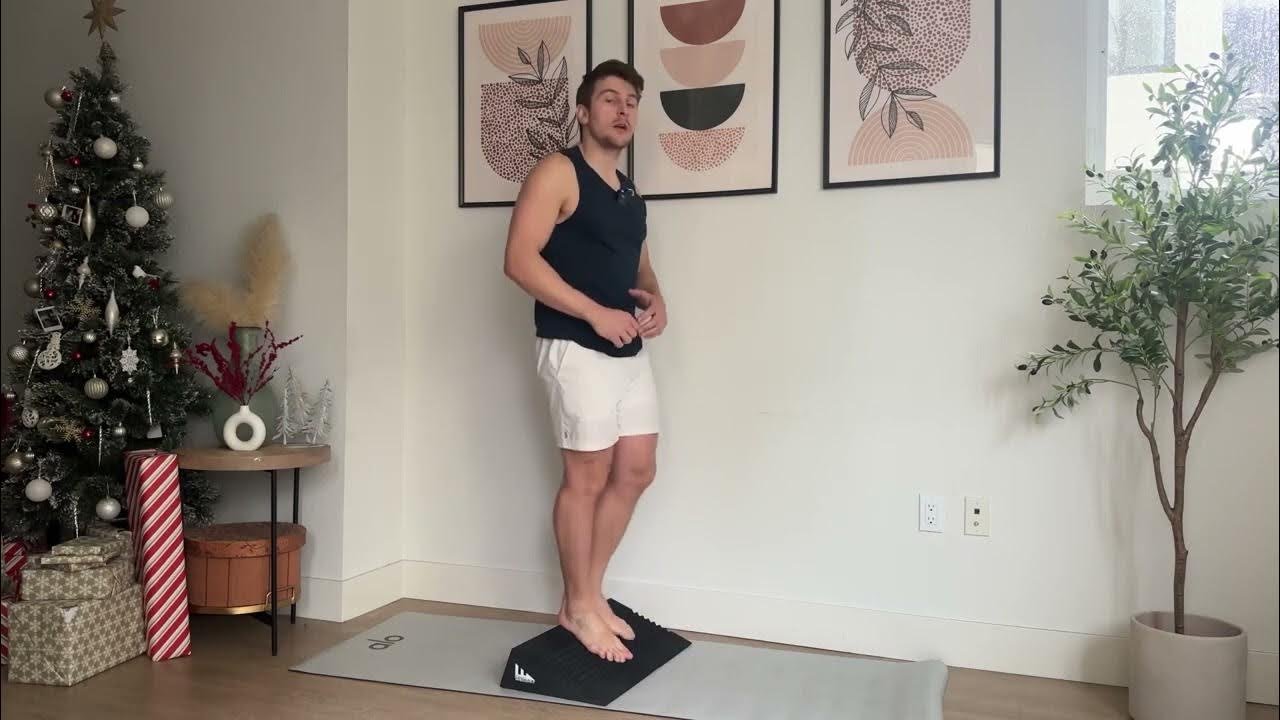
Two-leg calf stretch: Stand on the board with both feet supported and use a wall or stable object for balance.
Single-leg calf stretch: Progress to one leg at a time only when the two-leg position feels controlled.
Slightly bent-knee calf stretch: A small change in knee position can change where the stretch is felt.
Supported heel-elevated squat: If your board is designed and approved for this use, a modest incline can be used beneath the heels while practicing controlled squat mechanics.
Do not try to perform every exercise during your first session. Learn how the board feels under your feet first, then gradually introduce more demanding movements.
How Do You Do a Basic Calf Stretch on a Slant Board?
Place the slant board on a flat, stable surface. If it is adjustable, select a comfortable lower incline rather than immediately using the steepest setting.
Then:
Step onto the board carefully.
Position both feet securely.
Keep your heels supported according to the board’s design.
Stand tall and use a wall, rail, or stable support if necessary.
Move only far enough to feel a controlled stretch through the calf area.
Maintain normal breathing and avoid bouncing.
You should not need to force your body forward or tolerate sharp discomfort. If you cannot stay relaxed and balanced, reduce the incline.
Safety Note: Stretching should not cause sharp or unusual pain. Stop if you experience pain, numbness, dizziness, or other concerning symptoms.
Should I Keep My Knees Straight or Bent?
Both positions can be useful, but they feel different.
With the knee relatively straight, many users notice the stretch more prominently through the larger calf area. Slightly bending the knee changes the mechanics and may shift where the stretch is felt.
You do not need to force either position. Try each carefully and compare how your lower leg feels.
A useful approach is:
perform a controlled straight-knee stretch;
return to neutral;
slightly bend the knee;
repeat the stretch at a comfortable intensity.
Keep the movement small. The goal is not to push the knee as far forward as possible.
Can I Stretch One Calf at a Time?
Yes, single-leg stretching can help you focus on one side at a time, but it requires more balance and control than standing with both feet on the board.
If you try a single-leg variation:
use a stable support;
begin at a gentle incline;
keep the working foot fully supported;
avoid twisting the hips or torso;
compare sides without forcing them to feel identical.
Your left and right sides may not feel exactly the same. That does not mean you should aggressively stretch the tighter-feeling side until both sensations match.
What Is a Good Slant Board Exercise for Ankle Mobility?
A controlled knee-forward movement can be used as a general mobility drill when appropriate for the user and board setup.
With your foot securely supported, keep the heel in contact with the intended surface and gently allow the knee to travel forward while maintaining control. The amount of movement should remain comfortable.
Think of this as a mobility practice rather than a test of how far the knee can travel.
Useful cues include:
keep the foot stable;
avoid letting the ankle collapse dramatically inward or outward;
move slowly;
stay within a comfortable range;
use support if balance is uncertain.
If you are recovering from an ankle injury or have unexplained ankle pain, a general exercise article is not a substitute for individualized professional guidance.
Can You Do Squats on a Slant Board?
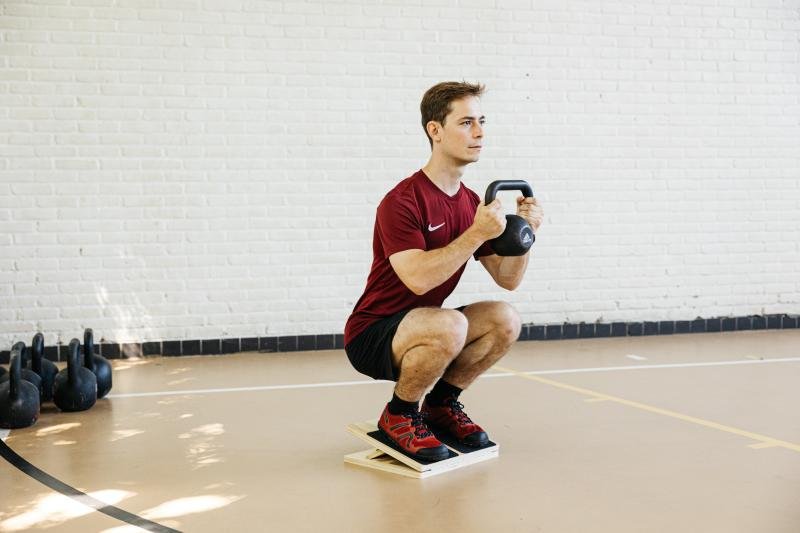
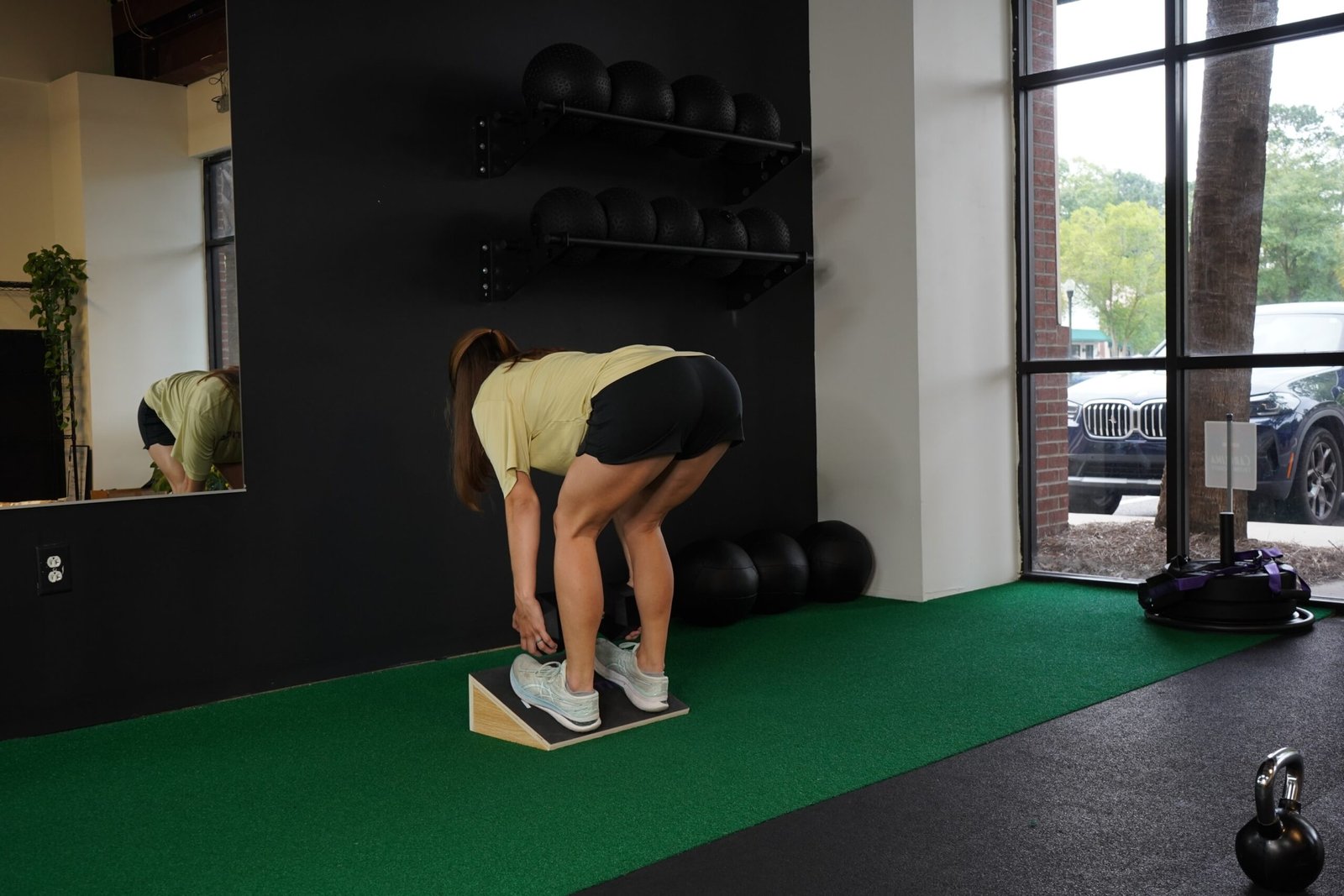
Some slant boards are used to elevate the heels during squats. This changes the position of the feet and ankles and can alter how the squat feels.
However, not every slant board is intended for dynamic exercises. Before using yours for squats, check the manufacturer’s instructions, weight capacity, surface grip, and intended use.
For a basic heel-elevated squat:
Position the board securely on a stable floor.
Place your heels on the inclined surface as intended.
Choose a stance that allows stable foot placement.
Begin with body weight rather than adding external load.
Lower yourself with control.
Stand back up without bouncing or shifting the board.
If you cannot maintain stable contact with the board, reduce the difficulty or stop.
Why Do Heel-Elevated Squats Feel Different?
Raising the heels changes the relationship between the ankle, knee, hip, and torso during the squat. Some people find that they can maintain a more upright torso or reach a comfortable squat depth more easily with heel elevation.
That does not mean heel elevation automatically improves every person’s squat.
It is simply a variation. Your body proportions, ankle mobility, stance, training goal, and exercise experience all influence whether it is useful.
Use heel elevation because it serves a clear purpose, not because slant board squats look more advanced.
Can I Use a Slant Board for Bodyweight Squat Practice?
Yes, if your board is designed for it and you can maintain a stable position.
Bodyweight practice is often a sensible starting point because it allows you to evaluate the setup before introducing weights.
During the movement, pay attention to:
foot stability;
board movement;
knee tracking;
comfortable squat depth;
controlled speed;
your ability to stand without losing balance.
If the board rocks, slides, bends unexpectedly, or is not approved for this type of loading, do not continue.
Can I Do Weighted Squats on a Slant Board?
Possibly, but this is where caution becomes more important.
Adding external weight increases the demands placed on both you and the equipment. Before attempting loaded exercises, verify that the board manufacturer permits the intended movement and that your total loading remains within the specified limits.
If you are new to heel-elevated squatting, first establish control with body weight.
⚠ Common Mistake: Do not assume that because a board feels solid during stretching, it is automatically designed for loaded strength exercises.
What Slant Board Exercise Is Best Before a Leg Workout?
There is no single mandatory warm-up exercise, but gentle calf and ankle movements can be incorporated into a broader warm-up when they feel appropriate.
One simple sequence is:
easy two-leg calf stretch;
slightly bent-knee variation;
controlled ankle movement;
a few bodyweight squats off the board;
heel-elevated squats if they are part of your planned workout.
A warm-up should help prepare you for activity rather than exhaust you. Avoid turning every stretch into a maximum-intensity effort before training.
How Long Should I Hold a Slant Board Stretch?
There is no single duration that is ideal for every person, goal, and stretching method. Rather than chasing a specific number, focus first on whether you can hold the position comfortably without bouncing or forcing the stretch.
If you are following a training program, physical therapist’s plan, or manufacturer-provided routine, use the guidance specific to that program.
For general recreational use, a controlled, manageable stretch is more important than holding an uncomfortable position simply to reach a predetermined time.
How Many Slant Board Exercises Should I Do in One Session?
You do not need a long list of exercises simply because the board can support multiple movements.
For many home users, two or three purposeful movements are enough for a simple session. For example:
basic straight-knee calf stretch;
bent-knee calf stretch;
controlled heel-elevated bodyweight squats.
If your goal is primarily stretching, there may be little value in adding squat variations simply to make the routine longer.
Match the exercise selection to your actual purpose.
What Angle Should I Use for Slant Board Exercises?
The best angle is one that allows you to perform the intended exercise with stability and control.
A common mistake is assuming that a steeper incline represents greater progress. In reality, a steep angle can simply make your position harder to control.
When selecting an incline, ask:
Can I maintain full, secure foot contact?
Can I balance without excessive effort?
Can I perform the movement without twisting or compensating?
Does the stretch feel controlled rather than painful?
Is this incline permitted for the exercise by the manufacturer?
If any answer is no, lower the angle.
Should Beginners Use the Lowest Angle?
A lower setting is often a sensible place to start on an adjustable board, but there is no universal setting that fits every user.
The important principle is gradual progression.
You might begin with a moderate, comfortable position and increase the incline only when:
the current setting is easy to control;
you understand the exercise;
you can maintain stable posture;
there is a specific reason to make the movement more demanding.
Do not increase the angle simply because the board provides another notch.
Can a Slant Board Help Me Squat Deeper?
Heel elevation can allow some people to access a different squat position, particularly if ankle movement is one of the factors influencing their squat mechanics.
But “deeper” is not automatically better.
A useful squat depth is one you can control while maintaining a stable stance and appropriate technique for your training goal. Using an incline to force yourself into a position you cannot control defeats the purpose.
If the goal is improving your squat rather than simply performing a variation, consider your overall technique, stance, mobility, strength, and training plan rather than relying entirely on the board.
Can I Use a Slant Board Every Day?
Frequency depends on what you are doing, how intense the exercise is, your overall activity, and how your body responds.
Gentle mobility work is very different from repeated loaded heel-elevated squatting. Treating all slant board exercises as one category makes frequency advice less useful.
If you use the board regularly, monitor:
how the muscles and joints feel afterward;
whether discomfort is increasing;
whether your exercise quality is improving or declining;
how the slant board work fits with the rest of your training.
More frequent use is not automatically more effective.
What Are the Most Common Slant Board Exercise Mistakes?
Most problems come from trying to make a simple exercise unnecessarily intense.
Common mistakes include:
Using too steep an angle: This can make balance and positioning harder.
Bouncing during stretches: Use controlled movement instead.
Ignoring foot position: Your feet should remain securely supported.
Using an unstable floor: The board should not slide or rock.
Adding weight too early: Learn the movement first.
Copying another person’s setup: Their flexibility and training goals may differ from yours.
Ignoring product limits: Verify the board’s intended use and weight capacity.
Using pain as a progress marker: Sharp or unusual pain is not a goal.
Do Slant Board Exercises Have to Feel Intense to Work?
No.
One of the least useful assumptions in stretching and mobility work is that stronger sensation always means a better result. An exercise can be purposeful without being extreme.
Your priorities should be:
control;
stable positioning;
appropriate range of motion;
gradual progression;
consistency.
If you are holding your breath, fighting for balance, or experiencing sharp discomfort, reduce the intensity.
Are Slant Board Exercises Good for Everyone?
No exercise tool is appropriate for every person in every circumstance.
A healthy recreational exerciser may be able to incorporate basic slant board movements without difficulty. Someone with an existing injury, significant balance problem, recent surgery, unexplained pain, or medical limitation may need individualized guidance.
A slant board should not be used to diagnose or treat an injury. It is exercise equipment, not a substitute for medical assessment or rehabilitation advice.
What Should I Check Before Every Slant Board Workout?
A quick setup check can prevent many avoidable problems.
✓ Place the board on a flat, stable surface.
✓ Confirm the adjustment mechanism is secure.
✓ Inspect the board for visible damage.
✓ Check that the standing surface provides adequate grip.
✓ Make sure you have enough surrounding space.
✓ Use a stable support if balance is uncertain.
✓ Verify that your planned exercise is appropriate for the board.
✓ Stay within the manufacturer’s stated limits.
This takes very little time and is especially important for adjustable or folding models.
What Is a Simple Slant Board Routine for Beginners?
If you want a straightforward starting routine, keep it uncomplicated.
Exercise 1: Supported Straight-Knee Calf Stretch
Stand on the board at a gentle incline and use a stable support. Maintain a comfortable stretch without bouncing.
Exercise 2: Supported Bent-Knee Calf Stretch
From a stable position, slightly bend the knees and compare how the stretch feels. Keep the movement controlled.
Exercise 3: Heel-Elevated Bodyweight Squat
If your board is designed for this exercise, perform a few slow bodyweight repetitions. Stop before technique or balance deteriorates.
That may be all you need at first. Add complexity only when it serves a clear purpose.
Which Slant Board Exercise Should You Start With?
The best slant board exercises are the ones that match your actual goal and allow you to maintain good control.
If your priority is calf stretching, begin with a simple two-leg standing stretch and experiment carefully with straight- and slightly bent-knee positions. If you want ankle-focused mobility, add controlled movement rather than forcing range. If you are interested in heel-elevated squats, first verify that your board is designed for dynamic exercise and establish stable bodyweight technique before thinking about extra resistance.
You do not need the steepest setting or the longest routine. A few well-chosen exercises performed consistently and comfortably are usually more practical than using every possible slant board variation in one session.
Safety Note: Stop any exercise that produces sharp or unusual pain, dizziness, numbness, instability, or significant discomfort. Follow the manufacturer’s instructions and weight limits. If you have an existing injury, medical condition, recent surgery, or significant mobility or balance limitation, seek appropriate professional guidance before beginning a new exercise routine.